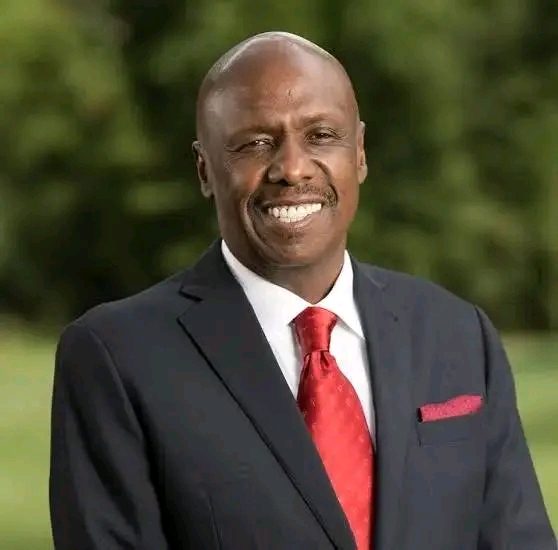
KANU Chairman and former Baringo Senator Gideon Moi has expressed deep concern over the current direction of national leadership, contrasting it with the style of governance he says was practiced during his father’s presidency.
In a statement shared publicly on Monday, Moi reflected on the legacy of the late President Daniel Arap Moi, arguing that leadership in that era was defined by integrity, public service, and programs that directly benefited ordinary citizens.
“I’m really worried about what’s happening with this leadership,” Moi said. “When my father was in government, he never organized goons to attack anyone. He never killed, never stole from Kenyans, and never abducted anyone. All he did was govern with integrity and give free milk to our children. That is what we call good governance. That is the Kenya we miss.
Gideon Moi’s remarks come amid growing public debate about accountability, security, and the role of government in citizens’ daily lives. By referencing his father’s 24-year tenure, he sought to highlight what he described as a commitment to order, discipline, and social welfare programs.
The late President Moi, who led Kenya from 1978 to 2002, is remembered for several initiatives, including the school milk program that provided free milk to primary school children. For many Kenyans, that program became a symbol of a government focused on basic needs and child welfare.
Gideon Moi pointed to that initiative as an example of leadership that prioritized the vulnerable.
“It wasn’t about politics of intimidation,” he said. “It was about making sure a child in a rural school had something to drink. That is service.”
He also emphasized what he characterized as a lack of political violence and state-sponsored intimidation during that period, contrasting it with recent incidents that have drawn public criticism.
While he did not name specific individuals or incidents, Moi’s comments appeared to address rising public anxiety over cases of abductions, political thuggery, and corruption that have dominated headlines in recent months.
Civil society groups, opposition leaders, and citizens have increasingly voiced concern about the shrinking civic space and about allegations of state actors being linked to harassment and violence against critics.
Moi said Kenyans deserve leadership that protects rather than threatens them.
“Leadership is about protecting the people,” he stated. “It is about ensuring that a citizen can speak, can work, and can raise a family without fear. When leadership becomes about force and fear, then we have lost our way.”
He called on current leaders to return to what he termed “the basics of governance”: honesty, transparency, and service delivery.
One of the most cited aspects of the late President Moi’s administration was the National School Milk Program, launched in the 1980s. The program aimed to improve nutrition for schoolchildren and to support local dairy farmers.
For Gideon Moi, that program represents more than just milk. It represents a philosophy of government.
“My father believed that if you take care of children, you take care of the future,” he said. “Giving free milk was not a handout. It was an investment in health, in education, and in productivity.”
He argued that similar targeted social programs are needed today to cushion Kenyans from the rising cost of living, unemployment, and poverty.
“We need to go back to thinking about the ordinary mwananchi,” he said. “What are we doing for the mother in the market? What are we doing for the student? What are we doing for the farmer?”
Gideon Moi also stressed the importance of integrity in public office. He said his father’s administration, despite its critics, was known for a certain level of discipline and respect for state institutions.
“He never stole from Kenyans,” Moi said. “That is a standard we should all hold ourselves to.”
He urged current leaders across the political divide to audit their conduct and to reject shortcuts that involve violence, theft, or abuse of power.
“Kenya is bigger than any individual,” he noted. “We must protect the dignity of this country and the dignity of its people.”
Moi’s statement quickly drew attention online and in political circles. Many Kenyans who grew up during the 1980s and 1990s responded positively to the reference to the school milk program, sharing memories of receiving milk in class.
Others used the moment to debate the broader legacy of the Moi era, with some praising its stability and others pointing to human rights concerns that were also documented during that time.
Political analysts said Gideon Moi’s remarks are significant because they come from a leader who carries both the name and the political machinery of KANU, one of Kenya’s oldest parties.
“This is Gideon positioning himself as a voice of moral authority,” said a Nairobi-based political commentator. “He is tapping into nostalgia, but also making a very direct comment about where he thinks we are today.”
As KANU Chairman, Gideon Moi has been working to rebrand the party and make it relevant to younger voters. The party, which dominated Kenyan politics for decades, has been seeking to carve out a space in the current political alignment.
In his statement, Moi suggested that KANU’s values of discipline, unity, and service remain relevant.
“We are not here to fight,” he said. “We are here to offer an alternative based on service. That is what KANU stood for, and that is what we want to bring back.”
He encouraged party members to engage in issue-based politics and to focus on solutions for education, health, agriculture, and youth empowerment.
Moi’s comments add to a wider national conversation about the kind of leadership Kenyans want ahead of the 2027 General Election. With economic pressures mounting and trust in institutions being tested, many citizens are asking what qualities they should demand from those seeking office.
The former senator said the answer lies in returning to principles.
“Good governance is not complicated,” he said. “Do not steal. Do not kill. Do not abduct. Serve the people. That is it.”
He concluded by saying that Kenyans should not settle for less.
“That is the Kenya we miss,” he said. “And that is the Kenya we can build again if we choose leaders with integrity.”
As the country moves closer to the next election cycle, statements like Moi’s are expected to shape debate about legacy, accountability, and policy priorities.
For now, the KANU leader says his focus is on reminding Kenyans of what is possible when leadership is guided by service rather than self-interest.
Whether his call resonates beyond party lines will depend on how other leaders respond and on whether voters see a clear link between past examples and present solutions.
But for Gideon Moi, the message is simple: integrity, protection of citizens, and programs that touch everyday lives are the benchmarks by which leadership should be judged.
Comments
No approved comments yet. Be the first to join the conversation.