
Nairobi is preparing to launch a new policing model that seeks to put residents and community leaders at the heart of public safety decisions, in what officials say is a major step toward more accountable and collaborative law enforcement across the capital.
The Nairobi Metropolitan Policing Framework is expected to be rolled out in the coming days following consultations between the Ministry of Interior, the National Police Service, and the Nairobi County Government. The initiative is designed to restructure how security is managed in the Nairobi Metropolitan Area by creating structured channels for public participation, joint planning, and shared oversight.
According to details shared after a high-level meeting, the new framework will bring together residents, local community representatives, the National Police Service, county government officials, and other stakeholders to collectively identify security challenges, set priorities, and develop solutions tailored to specific neighborhoods.
For years, residents of Nairobi have called for a policing approach that feels less distant and more responsive to local needs. The new model directly responds to that demand by anchoring security operations in consultation and collaboration rather than in top-down directives alone.
Under the proposed structure, community members will work alongside police commanders and county officials to map out crime hotspots, agree on intervention strategies, and monitor implementation. The idea is to ensure that policing reflects the realities on the ground, from informal settlements to the central business district and peri-urban areas around the city.
Officials expressed satisfaction with the progress made so far in establishing the Nairobi Metropolitan Police structure. They noted that the framework is not about creating a separate police force, but about changing how existing security institutions engage with the public.
“The goal is to place communities at the centre of policing,” the joint statement read. “This will be achieved through a framework that brings together residents, community leaders, the National Police Service, the county government and other stakeholders to jointly identify security priorities, strengthen oversight and develop local solutions through consultation and public participation.”
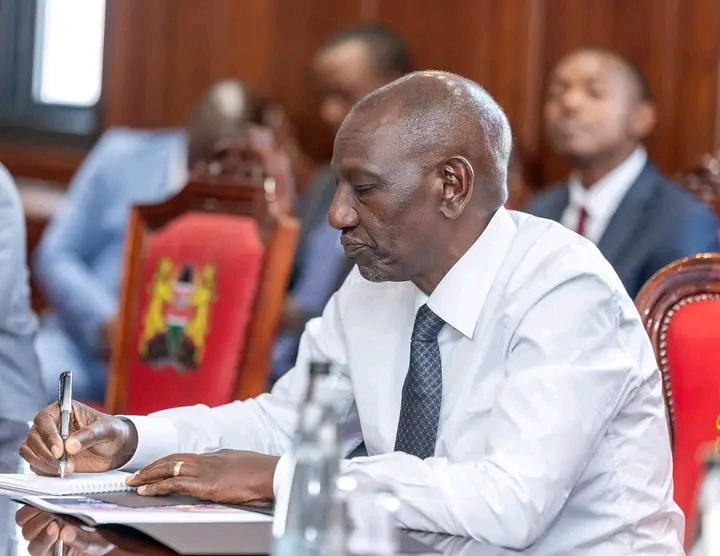
The initiative follows several engagements between key government actors. The meeting that finalized the rollout plans was attended by officials from the Ministry of Interior, led by Cabinet Secretary Kipchumba Murkomen. Also present was the leadership of the National Police Service, headed by Inspector-General of Police Douglas Kanja, as well as representatives of the Nairobi County Government under Governor Johnson Sakaja.
The presence of both national and county leadership signals an effort to harmonize responsibilities that have often overlapped or been unclear in the past. Nairobi’s unique status as both a county and the country’s capital means that security management has required close coordination between the two levels of government.
The Nairobi Metropolitan Area covers not just the city core but also surrounding zones that are economically and socially tied to Nairobi. That makes coordination even more critical, given the movement of people, goods, and services across county boundaries daily.
Officials said the framework will lay the groundwork for clearer roles, better information sharing, and faster response to emerging threats.
The rollout of the Nairobi Metropolitan Policing Framework is scheduled to begin in the coming days. While full operational details are still being finalized, the early phase will focus on establishing consultative structures at the ward and sub-county levels.
These structures will serve as forums where residents can raise concerns, police can share crime data and prevention strategies, and county officials can align security plans with other services such as lighting, drainage, and urban planning. The emphasis will be on prevention as much as response.
The framework also seeks to strengthen oversight. By involving community leaders and civil society in monitoring, officials hope to build mechanisms that make police operations more transparent and accountable to the public they serve.
“Through consultation and public participation, we can develop local solutions that actually work,” officials noted. “This is about moving away from a one-size-fits-all approach to security.”
The overarching objective of the new model is threefold: improve public safety, deepen trust between communities and law enforcement, and create safer neighborhoods for all Nairobi residents.
Trust has been a persistent challenge in police-community relations in Kenya. Cases of misconduct, slow response times, and lack of communication have in the past strained that relationship. By institutionalizing dialogue, the new framework aims to close that gap.
Strengthening public safety will involve both conventional policing and broader crime prevention measures. That includes working with youth groups, business associations, faith leaders, and estate representatives to address the social and economic factors that contribute to crime.
Building safer neighborhoods will also require the county government to align infrastructure projects with security needs. Better street lighting, clear pedestrian paths, and functional CCTV systems are expected to be part of the conversation in the new consultative forums.
“Together, we will strengthen public safety, deepen trust between communities and law enforcement, and build safer and more secure neighbourhoods for all,” officials said.
Nairobi faces a complex set of security challenges. These range from petty crime and traffic-related offenses to organized gangs, drug trafficking, and terrorism threats. A rapidly growing population and urban expansion have also stretched existing police resources.
The Metropolitan Policing Framework is being positioned as a way to make the best use of available resources by ensuring they are directed where communities say they are needed most. It also recognizes that police alone cannot solve all security problems without the support and participation of residents.
Experts on urban governance have long argued that effective city policing requires local knowledge. Residents often have the earliest information about suspicious activity, but may be reluctant to share it if they do not trust the system. Creating formal channels for that exchange could improve both intelligence gathering and community buy-in.
With the policy framework now agreed upon, the focus shifts to implementation. The Ministry of Interior, the National Police Service, and Nairobi County are expected to announce timelines and the specific areas where pilot activities will begin.
Training for police officers and community representatives will likely be part of the early rollout, to ensure everyone understands their roles under the new structure. Public awareness campaigns will also be needed so that residents know how to participate and where to take their concerns.
Governor Sakaja’s administration has indicated willingness to support the initiative through county resources and existing community engagement programs. The National Police Service, for its part, will be expected to adapt operational procedures to fit the collaborative model.
The success of the framework will ultimately be measured by whether Nairobi residents feel safer and whether they see tangible changes in how security issues are handled in their estates and streets.
If implemented effectively, the Nairobi model could serve as a reference for other urban centers in Kenya dealing with similar challenges. Cities like Mombasa, Kisumu, and Nakuru also grapple with balancing national policing mandates with local community needs.
For now, all eyes are on Nairobi as it prepares to operationalize the new approach. The commitment from national government, police leadership, and county officials suggests there is political will behind the project.
What remains is turning that commitment into practice on the ground — in every estate, market, and neighborhood across the Nairobi Metropolitan Area.
As the rollout begins, officials are urging residents to take part actively. The message is clear: safety is a shared responsibility, and the new framework is designed to make sure every voice counts in building a more secure Nairobi.


Comments
No approved comments yet. Be the first to join the conversation.