
There is a strange political language developing in Ol Kalou.
It is not being spoken from podiums. It is not being written in manifestos. It is not even coming from the loud campaign caravans moving through Nyandarua with music, slogans, and dust behind them.
It is being spoken through torn banners.
Just days after UDA campaign materials were pulled down in Ol Kalou ahead of the July 16 by-election, another storm has emerged. This time, DCP supporters say their candidate’s banners have also been vandalised.
Book this slotNyandarua Senator John Methu captured the mood in a Facebook post, saying tens of banners had been destroyed overnight and that each cost around KSh 7,000. He then appealed for support to replace them.
That post may have been written as a fundraising appeal, but politically, it reads like something bigger.
It reads like a constituency entering the dangerous phase of campaign panic.
This Is No Longer Just About Banners
Book this slotA campaign banner is not just a piece of printed material hanging by the roadside.
In Kenyan politics, a banner is a declaration of presence. It says: “We are here. We are organised. We have supporters. We are visible.”
So when banners are torn down, the act is not merely physical. It is symbolic.
It is an attempt to erase a candidate from public view. It is a message sent at night because the sender lacks the courage to argue in daylight.
Book this slotThat is why the vandalism in Ol Kalou should worry every serious democrat, regardless of party. Today it is UDA’s banner. Tomorrow it is DCP’s. Next week it may be someone’s meeting, convoy, polling agent, or supporter.
Dirty politics rarely starts as a fire. It starts as smoke.
UDA, DCP, and the Battle for Political Oxygen
The Ol Kalou by-election has become a high-stakes contest between Samuel Muchina Nyagah of UDA and Sammy Douglas Kamau Ngotho of DCP.
Book this slotOn paper, this is a constituency race. In reality, it has become a political thermometer for Mt Kenya ahead of 2027.
UDA wants to prove that it still has grip, structure, and acceptance in a region that once gave it strong political oxygen. DCP wants to prove that the anger around Rigathi Gachagua’s fallout with the government is not just rally noise, but a real vote-moving force.
That is why every small incident in Ol Kalou is now being interpreted nationally.
A torn banner is no longer just a torn banner. It becomes a headline. A fundraiser becomes a statement. A suit becomes a symbol. A roadside crowd becomes a poll.
Book this slotThe Politics of Sympathy Is Now in Play
The DCP side has turned the vandalism into a grassroots moment.
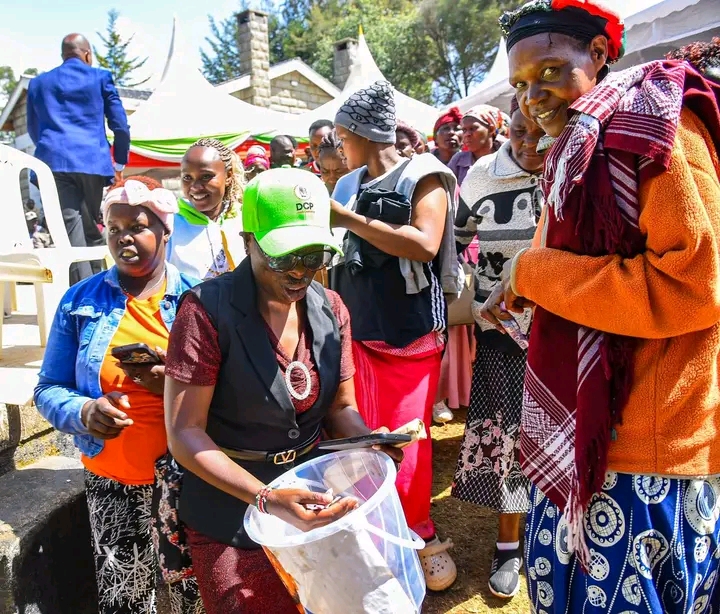
After claims that their banners were destroyed, supporters moved into a familiar but politically clever tool: a small-money harambee. The idea of residents contributing even KSh 10 to replace campaign materials is not just about raising money.
It is about creating ownership.
Book this slotWhen a voter gives KSh 10, they do not feel like a spectator anymore. They feel like a shareholder in the campaign. That is powerful politics.
This follows the earlier fundraiser where supporters contributed money to buy an executive suit for Sammy Ngotho after Moses Kuria reportedly ridiculed his appearance and referred to him in insulting terms during campaigns for the UDA candidate.
That moment may have been intended to embarrass Ngotho. Instead, it appears to have given his supporters a campaign story.
In politics, ridicule can backfire badly. Sometimes the person being mocked becomes the person voters decide to protect.
Book this slotMoses Kuria May Have Given DCP a Gift
Kenyan politics enjoys theatre, but theatre has limits.
When a senior politician mocks a candidate as poor, badly dressed, or socially inferior, the message can land differently from how it was intended. To some voters, it does not sound like strategy. It sounds like arrogance.
In a constituency where many ordinary people are struggling with school fees, farm costs, rent, unemployment, and the price of unga, mocking a candidate’s appearance can create emotional backlash.
Book this slotA voter may ask: if they can mock him for not looking polished enough, what do they think of us?
That is the danger.
DCP has cleverly converted that insult into a “people versus power” narrative. The suit fundraiser was not just about clothing. It was about dignity. Now the banner fundraiser is not just about campaign material. It is about resistance.
That is how emotional campaigns are built.
Book this slotBut Let Us Be Honest: Both Camps Must Be Questioned
There are whispers and claims that rival camps may be involved in tearing down each other’s banners.
But whispers are not evidence.
Until police, IEBC, or credible investigators establish responsibility, no candidate should be declared guilty by political gossip. Kenya has suffered enough from accusation politics, where every incident is quickly turned into propaganda before facts arrive.
Book this slotStill, both UDA and DCP must answer a moral question.
Are they willing to publicly condemn vandalism even when it happens against their opponent?
That is the true test.
It is easy to cry when your banner is torn. It is harder to defend your rival’s right to campaign freely.
Book this slotIf Muchina’s materials are vandalised, DCP leaders should condemn it. If Ngotho’s banners are destroyed, UDA leaders should condemn it. Democracy cannot survive on selective outrage.
Ol Kalou Is Exposing a Bigger Disease
What is happening in Ol Kalou is not isolated.
Kenya’s political culture has always had a rough edge. Posters are defaced. Meetings are disrupted. Opponents are heckled. Young people are sometimes mobilised not to debate, but to intimidate.
Book this slotThen, after the damage is done, leaders pretend to be shocked.
The problem is that by-elections often attract political excess. Because the contest is smaller, national leaders pour attention into it. Because the stakes are symbolic, parties behave as if losing is a national humiliation. Because the timeline is short, campaigns become desperate.
That desperation is now visible in Ol Kalou.
And if leaders do not cool temperatures, the torn banners may only be the opening paragraph of a uglier story.
Book this slotThe Voter Should Not Be Distracted
Ol Kalou voters must be careful.
They are being pulled into a national drama, but the MP they elect will represent their local needs. Roads. Water. Schools. Bursaries. Health facilities. Agriculture. Youth jobs. Security. Accountability of public funds.
Those issues should not be obscured by billboard wars.
Book this slotA torn banner does not build a classroom. A viral insult does not repair a road. A political convoy does not guarantee better representation.
The real question for Ol Kalou should remain simple: who is best prepared to serve the constituency after the noise ends?
This Could Be the Dirtiest Phase of the Campaign
Is this the dirtiest politics Kenya has ever seen? Maybe not. This country has seen darker chapters.
Book this slotBut is Ol Kalou drifting into dangerous, petty, immature politics? Absolutely.
When campaigns begin to compete through vandalism, insults, class mockery, and sympathy battles, voters should know that something is wrong. It means ideas are struggling. It means discipline is weak. It means someone somewhere believes destruction can replace persuasion.
That is a dangerous road.
The IEBC, security agencies, religious leaders, local elders, youth groups, and candidates themselves must speak clearly before the campaign becomes uglier.
Book this slotBecause a by-election should be a contest of ideas, not a night shift for political vandals.
Ol Kalou Must Refuse to Be Used
The people of Ol Kalou have an opportunity to send a mature message.
They can listen to every candidate, attend rallies peacefully, question promises, reject intimidation, protect public order, and punish dirty politics at the ballot.
Book this slotThat is where power truly sits.
Not in the banners. Not in the insults. Not in the convoys. Not in the harambees.
The power sits with the voter who wakes up on July 16 and decides that leadership must be earned, not imposed through noise.
If Ol Kalou chooses wisely, this by-election can become more than a political battlefield. It can become a reminder that even in Kenya’s heated politics, the voter is not a tool.
Book this slotThe voter is the final judge.
Comments
No approved comments yet. Be the first to join the conversation.