
Kenya’s youth entrepreneurs have been handed fresh relief after President William Ruto announced that all participants in the National Youth Opportunities Towards Advancement, NYOTA, programme will not pay county business permit fees for the next two years.
The decision forms part of wider government efforts to lower operating costs and give young business owners breathing room as they establish and grow their ventures.
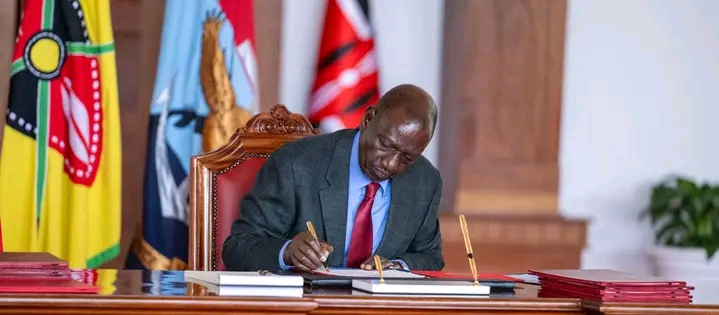
During the Second phase launch of NYOTA business support grant , the President instructed county governments and other relevant bodies to waive permit levies for every NYOTA beneficiary who is starting or currently running a business.
The exemption will last 24 months and applies only to youth who qualified through the Entrepreneurial Aptitude Test and completed the required training under NYOTA.
According to State House, the purpose is to shield young entrepreneurs from early expenses that often strain new businesses and lead to early closures. With permit fees out of the way, beneficiaries can channel resources toward stock, tools, branding, and business expansion.
A statement from the President’s office noted: _“Our aim is to ensure young people can launch, maintain and grow enterprises without being burdened by avoidable costs in the initial stages.''
The announcement comes just as the government prepares to roll out the second round of NYOTA business start-up funding.
Susan Mang’eni, the Principal Secretary for MSMEs Development, said this second payout will be done *at the same time across the country*. The first disbursement was released in batches, but officials want to avoid further delays and ensure equal treatment.
Progress reports indicate the programme is working. More than 98% of first-round recipients have started businesses, and over 99%have set up operational enterprises.
For most small businesses, obtaining a county business permit is one of the earliest and heaviest costs after registration. Depending on location and business type, these fees can run into thousands of shillings each year.
For a NYOTA beneficiary receiving Ksh 25,000 or Ksh 50,000 in total, that expense can eat deeply into capital meant for goods.
The government also expects the waiver to motivate more youth to register their businesses early, knowing they won’t face permit charges right away.
NYOTA is a five-year initiative that began in March 2025. It is jointly run by the Government of Kenya and the World Bank, with a focus on creating jobs and empowering vulnerable youth.
The programme also extends to young people in Kakuma and Dadaab refugee camps, as well as surrounding host communities. Implementation involves NITA, MSMEA, NEA, NSSF and other agencies, coordinated by the Ministries of Youth, MSMEs, and Labour.
Interest in NYOTA exceeded expectations. Close to 2 million youth applied for the Business Support Component alone. In response, the government and World Bank moved from a phased rollout to a single national intake, to ensure qualified applicants were not left out.
Deputy President Kithure Kindiki, after receiving a briefing on NYOTA’s progress, added that once the second tranche is paid, beneficiaries should also explore other funding avenues such as the Hustler Fund, Uwezo Fund, and Youth Enterprise Development Fund to scale their businesses.
The pairing of startup capital with cost relief marks a shift in how government supports youth enterprises. The model is no longer just about giving grants. It now combines money, training, savings, and a grace period on regulatory costs.
For the 122,147 youth awaiting the final Ksh 25,000, the permit exemption provides added cushion. It means that when funds arrive at the end of June, they can be fully invested in the business rather than diverted to county fees.
When launching Phase 2 of NYOTA in Samburu earlier in the year, President Ruto emphasized that the objective is to nurture businesses that endure, not ones that fade out quickly.
With training underway, funds scheduled for release, and permit costs lifted for two years, NYOTA participants now have a stronger foundation to test ideas, serve markets, and build lasting enterprises.
In the coming weeks, county governments are expected to publish guidelines on how beneficiaries can access the waiver and what documentation will be required.

Comments
No approved comments yet. Be the first to join the conversation.