

Nairobi was on high alert Tuesday morning as anti-riot police units took positions around the Kenya National Archives, a key landmark in the city center that has become a symbolic gathering point during national protests.
Images circulating on social media early today showed several truckloads of General Service Unit officers stationed outside the archives building along Moi Avenue. The officers, wearing tactical gear, red helmets and body armor, were seen standing beside military-style vehicles with their equipment ready. The deployment comes as Kenyans mark Saba Saba Day, July 7, a date historically linked to demands for political reform and multiparty democracy in Kenya.
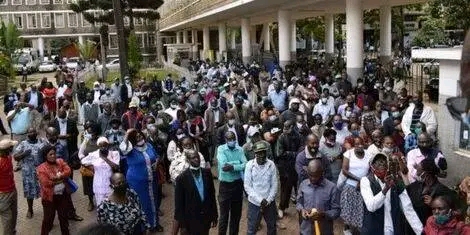
The Kenya National Archives has long been more than a repository of historical documents. For decades it has served as a meeting point for activists, civil society groups, and citizens during moments of public expression. During previous Saba Saba commemorations and the 2023-2024 cost of living protests, demonstrators often converged near the building before marching toward Parliament and other government offices.
Because of that history, security agencies routinely reinforce the area ahead of July 7. This year was no different. By 10:00 AM, witnesses reported at least two GSU trucks, several police Land Cruisers, and foot patrols along the stretch between the Archives, City Hall Way, and Parliament Road.
Book this slotOfficers were observed conducting briefings beside their vehicles. Some stood in formation while others monitored pedestrian and vehicle traffic. The presence of riot shields and helmets indicated preparations for crowd control, though no confrontation had been reported at the time the photos were taken.
Saba Saba translates to “seven seven” in Kiswahili. The date marks July 7, 1990, when Kenyans took to the streets to demand the reintroduction of multiparty politics. That day ended in a violent crackdown, but it is widely credited with opening political space in the country.
In recent years, the commemoration has evolved. For some, it is a day to reflect on democratic gains. For others, especially youth groups and civil society organizations, it has become a day to raise current grievances around the economy, governance, and public service delivery.
This year’s buildup has been closely watched. In the weeks leading up to July 7, several groups announced plans to hold peaceful gatherings and memorials. Others called for a nationwide day of reflection. On social media, hashtags referencing Saba Saba trended from Sunday night, with users sharing historical footage, opinions, and safety advisories.
Book this slotThe deployment at the Archives was part of a wider security footprint across Nairobi’s central business district. Police vehicles were also spotted along Kenyatta Avenue, Haile Selassie Avenue, and near major intersections leading to government buildings.
Businesses in the CBD opened, but with caution. Some shops along Moi Avenue lowered their shutters by mid-morning, while matatu operators adjusted routes to avoid areas with heavy police presence. Pedestrian traffic remained steady, with many workers heading to offices despite the visible security.
A vendor who sells newspapers near the Archives said the police arrived before 8:00 AM. “They parked the big trucks and the officers came down. It’s the same every Saba Saba. They don’t want people to gather there,” he said.
No official statement had been issued by the National Police Service by mid-morning regarding the specific deployment at the Archives. However, in past years the NPS has said that such measures are intended to “maintain public order and protect critical infrastructure” during commemorations.
Book this slotThe Facebook post by Mtetezi Mohoro quickly became part of the broader online conversation about Saba Saba. Commenters shared mixed reactions. Some expressed concern about the militarized presence in the city center. Others said the police deployment was necessary to prevent disruption.
“Every year it’s the same story. Trucks, helmets, and tension at the Archives,” one commenter wrote. Another said, “Let people commemorate peacefully. That’s what democracy is about.”
Security analysts note that the Kenya National Archives has been a focal point during every major Saba Saba commemoration since the 1990s. In 2017, 2020, and 2023, similar deployments were reported in the same location.
The reason is both symbolic and practical. The Archives sit at a junction that connects to Parliament, the Office of the President, and major commercial streets. Controlling access to the area gives security agencies the ability to manage crowd movement toward key government institutions.
Book this slotHuman rights groups have in the past called for restraint and dialogue during Saba Saba, urging police to allow peaceful assembly while also protecting property. In a statement last week, one civil society coalition said, “Kenyans have a constitutional right to assemble. We ask the police to facilitate, not frustrate, that right.”
As of late morning, the situation around the Kenya National Archives remained calm. The anti-riot officers continued to stand by their vehicles. Traffic was flowing, though with intermittent checks by traffic police.
Organizers of planned commemorations said they would proceed with small gatherings in designated public spaces and online forums, rather than large marches. Some groups announced candlelight vigils in the evening to honor those who died during past protests.
For many Nairobi residents, Saba Saba is now both a historical marker and a real-time test of how the country balances security with civic expression. The images from the Archives serve as a reminder of that tension.
Book this slotThe National Police Service has previously said it respects the right to peaceful assembly but will act against any destruction of property or breach of peace. Whether Monday passes without incident will likely depend on how both demonstrators and security forces engage through the day.
For now, the trucks remain parked, the officers remain on standby, and the Archives, a building that holds Kenya’s history, continues to sit at the center of its present.
As the day progresses, residents are advised to monitor local updates, avoid restricted areas around government buildings, and follow guidance from authorities and community leaders.


Comments
No approved comments yet. Be the first to join the conversation.