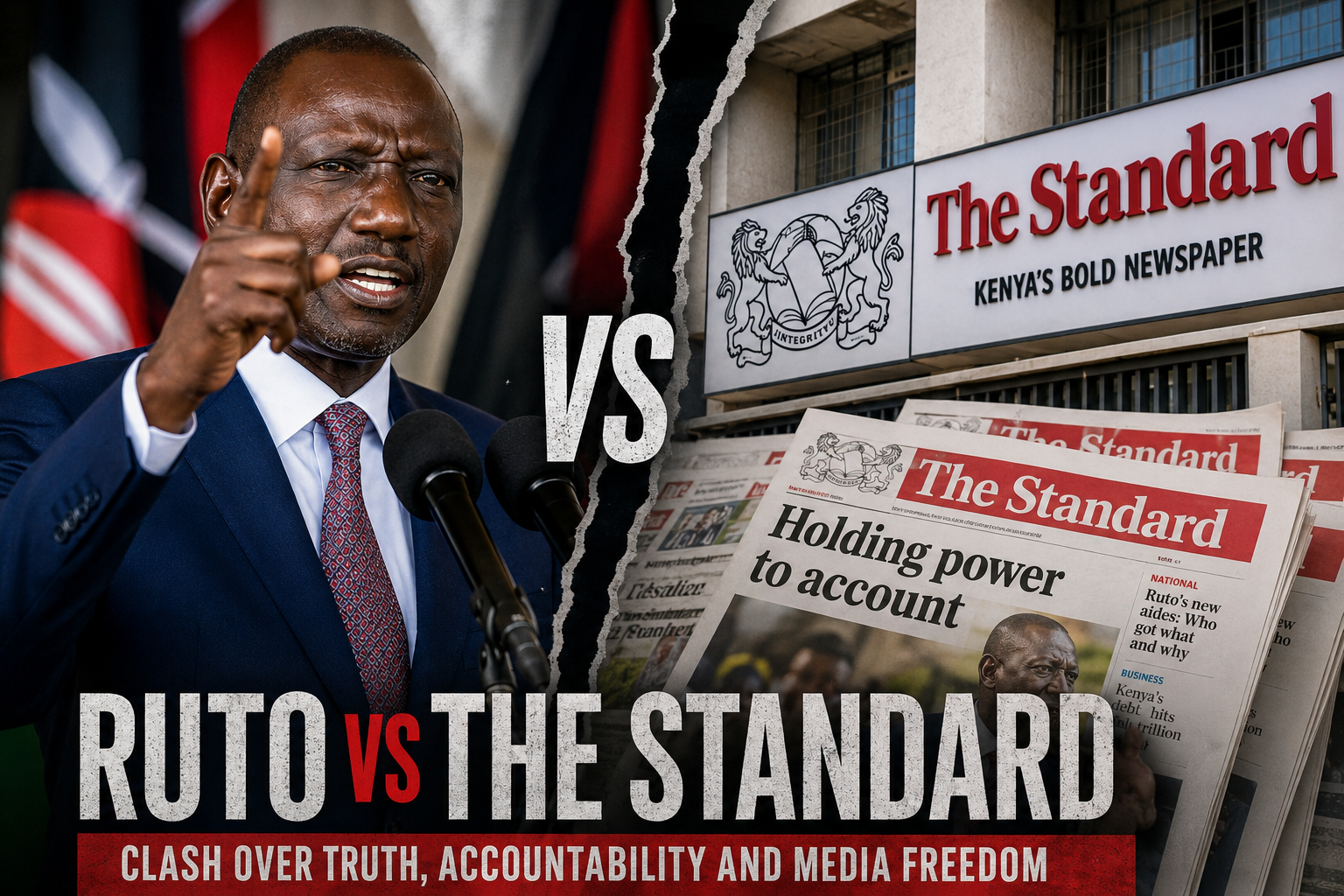
A fresh confrontation has erupted between President William Ruto and The Standard Media Group, reigniting debate over media freedom, government accountability and the role of the press in Kenya's democracy.
The dispute escalated after President Ruto publicly criticized The Standard's coverage of his administration, accusing the media house of pursuing a pattern of hostility and negativity against his government. The President's remarks, made through social media, singled out the newspaper and questioned its editorial approach.
In response, The Standard issued a strongly worded statement defending its journalism and editorial independence. The media house rejected claims of bias, insisting that its reporting is guided by facts, public interest and professional ethics rather than political considerations.
"The media's role in a democracy is to act as a watchdog," the publication said, adding that it would continue holding those in power accountable regardless of political pressure.
Book this slotThe exchange marks the latest chapter in an increasingly tense relationship between the Kenya Kwanza administration and sections of the media. Over the past year, several of The Standard's bold front-page headlines have attracted both praise and criticism, with supporters describing them as fearless journalism while critics have labeled them sensational.
The Standard also raised concerns about what it described as attempts to intimidate independent journalism. In its statement, the media group argued that public attacks on news organizations could create a hostile environment for reporters and undermine press freedom.
At the center of the dispute is a broader question facing many democracies worldwide: where should the line be drawn between government criticism of media coverage and respect for the independence of the press?
Media analysts note that robust engagement between governments and journalists is a normal feature of democratic societies. However, they caution that such disagreements should not erode constitutional protections that guarantee freedom of expression and the public's right to information.
Book this slotPolitical observers believe the clash reflects growing tensions ahead of the country's next electoral cycle, with scrutiny of government performance expected to intensify. As economic challenges, governance issues, and public accountability remain key topics in national discourse, the relationship between the State and the media is likely to remain under close public watch.
For now, neither side appears willing to back down. President Ruto has maintained that criticism of his administration should be fair and factual, while The Standard insists it will continue publishing stories that serve the public interest, regardless of who occupies the country's highest office.
As the debate unfolds, many Kenyans will be watching closely to see whether the confrontation develops into a broader national conversation about press freedom, political tolerance and the future of independent journalism in Kenya.
Comments
No approved comments yet. Be the first to join the conversation.