
If Every Person Left…
Ubuntu is often expressed in one deceptively simple sentence, “I am because we are.” It is a powerful statement about human interconnectedness reminding us that none of us exists entirely in isolation. Our language, values, opportunities, identity, and even our understanding of ourselves are shaped by the people and communities around us. We are born into families, cultures, and societies that precede us, and much of who we become is made possible by those relationships.
But there is a question that troubles the simplicity of the phrase because what is “we” without “me”? If the individual exists because of the community, should we not also acknowledge that the community exists because of the individual? If society shapes me, I also shape society, and if the collective influences my identity, my choices, ideas and actions also influence the collective. Perhaps Ubuntu is incomplete when understood only as a one-way relationship.
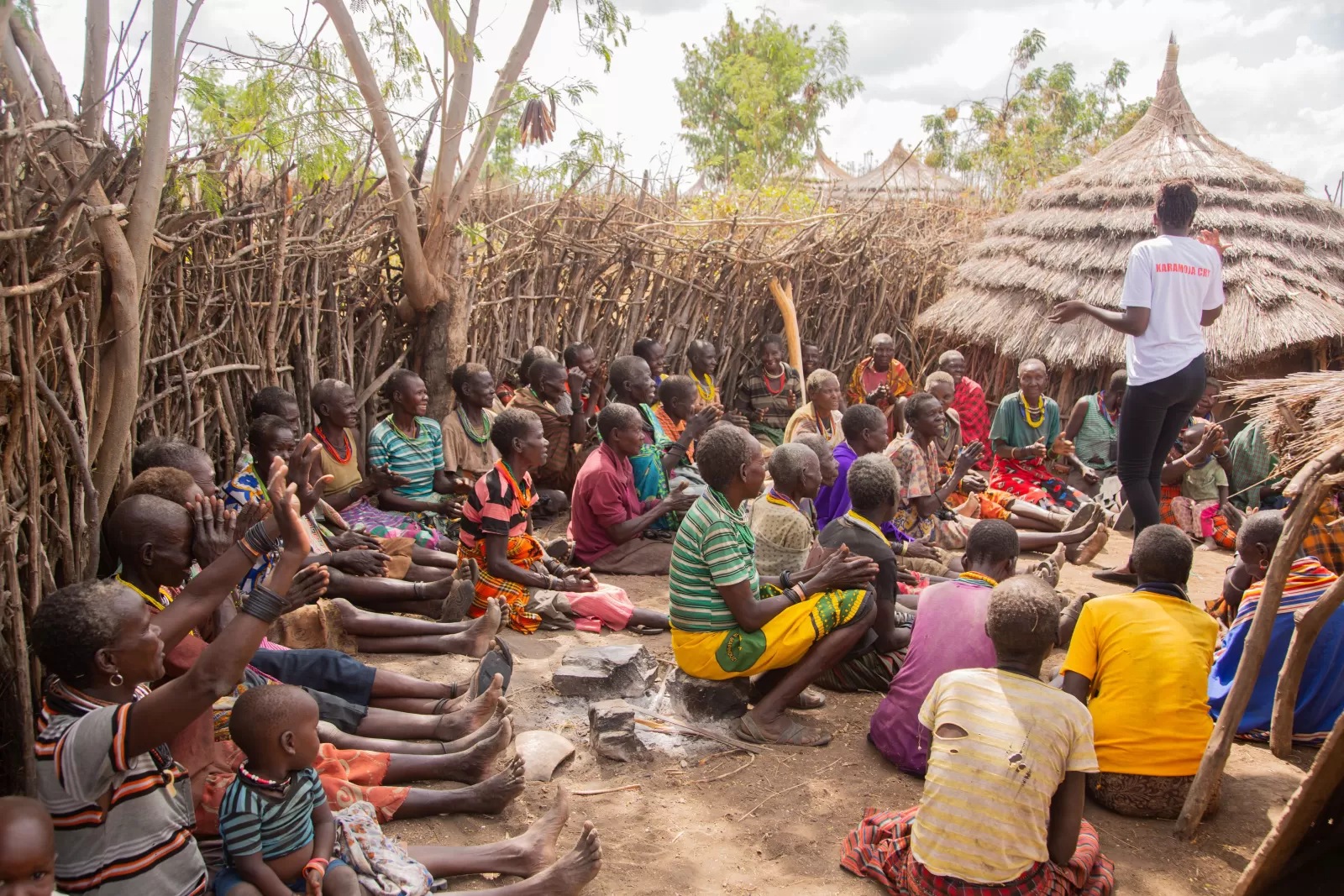
Book a Mid-Article Native AdDesktop: Fluid (728x90) · Mobile: Fluid (300x250)Here is a simple test. Think of your home village, or your estate in the city. Now imagine that every person left, the houses stay, the road stays, the church, the borehole and the shop counter all stay. Is there still a community? Nobody would say yes. Without people, there are only empty buildings. That small thought carries a big question, when we say “we,” what exactly are we pointing at? Ubuntu invites us to ask it although we hardly ever do.
What Ubuntu gets right
Ubuntu is often summed up in the words of Archbishop Emeritus Desmond Tutu in that, a person is a person through other persons. Kenya’s own John Mbiti wrote, “I am, because we are; and since we are, therefore I am.” Let us admit how true this is as nobody raises themselves. You learnt your first words from your mother, your aunties fed you, your teachers, your church, and your neighbors shaped you before you could choose anything. This is a claim about where a person comes from and on that, Ubuntu is right, and I have no quarrel with it.
Arguably though, “where I came from” is not the same as “what the “we” is made of.” Take language for instance, you may have learnt Kikamba, Kikuyu or Dholuo from your community. However, a language lives in the mouths of people who keep speaking it, and when the last speaker dies, the language dies too. Some of Kenya’s smallest languages are now held by a few elderly speakers. A language does not float above its speakers but rather is a product of what they do together, day after day.
Book a Mid-Article Native AdDesktop: Fluid (728x90) · Mobile: Fluid (300x250)A community works the same way. In the analogy of a choir, there is no choir without singers, and the choir is not an extra voice standing behind them. The singing makes the choir such that when people stop singing, it is gone. The community is not a thing we belong to but rather a social entity that we keep doing by belonging
Thus, what is the “we” in Ubuntu? I think it is a web of promises such as in a chama where each member promises to pay on time and trusts the others to do the same. Moreover, every promise is made, kept, or broken by one person at a time. Thus, the “We” is real, but it is real the way a promise is real as it exists only while people keep it.
Only persons can feel
Here is a second test when thinking about who can be hungry, Only a person. A “community” cannot be hungry, but a child in Turkana can. A nation cannot feel proud, but a mother watching her son graduate can. Fear, hope, love and grief all happen inside individual people, and nowhere else.
This matters because “the community” is often used as a shield often in the argument that “It is for the good of the community.” Fine. But questions arise on who’s good? Which people, by name? Philosophers call this habit methodological individualism, which is a heavy phrase for a simple rule emerging suggesting that when someone speaks for the group, there is a need to ask which persons they mean.
A “we” you cannot leave is a cage
Now the hard part, especially in the modern society, is that a real “we” must let a person say no. If you cannot refuse, your yes means nothing. Consider female genital mutilation, defended in some communities for generations as “our way.” Kenya outlawed it in 2011. The 2022 Demographic and Health Survey found that 15 per cent of women aged 15 to 49 had been cut, down from 38 per cent in 1998.
Laws and campaigns helped, and many communities are now leading the change themselves. However, in every home it came down to a person deciding “not my daughter.” The community did not correct its members. Its members changed the community.
Thus, what is the “we” in Ubuntu? I think it is a web of promises such as in a chama where each member promises to pay on time and trusts the others to do the same.
This is why the right to leave matters. A chama member can quit. A village elder can be challenged. A church can be reformed. Communities that let people question and exit tend to be the ones people choose to stay in.
African philosophers have argued about this for decades. Ifeanyi Menkiti of Nigeria said a person is not fully a person at birth. Personhood is earned by being taken into the community. Kwame Gyekye of Ghana disagreed. He said community matters deeply, but a person has worth and rights of their own, and can question the customs they inherit naming his view as moderate communitarianism. Menkiti’s view can leave the individual as raw material for the group to shape while Gyekye’s leaves room for conscience. I think Gyekye is right, and I think Kenya would agree.
Kenya already wrote it down
The Kenyan Constitution opens with “We, the people of Kenya.” That is a “We” alright. However, turn to Article 19 of the Bill of Rights which declares that our rights “belong to each individual and are not granted by the State.” The same article speaks of the dignity of individuals and communities, where both are kept in view. Yet, it is clear about who holds the rights where the people begin as a “we” and at once promise to protect the I. That is not an accident as a country that names the “we” but forgets the “I” would have otherwise forgotten what it is made of.
The duty that follows
I must also make it clear that “We are because I am” is not permission to be selfish but rather the opposite in our own rational self-egoism, a concept that places self-interest at the center of human motivation and moral decision-making. If the “we” is made by me, then I cannot hide inside it. “The community” cannot be blamed for the pothole nobody reported, the bribe somebody paid, or the neighbour nobody checked on. A “we” cannot be responsible. Only persons can.
So this is a demanding idea that every one of us is a builder of the community, every day, by what we choose to do and refuse to do.
Ideally, Ubuntu says “I am because we are” and by all means let us keep that. However, let us add the other half, “we are because I am.” The first tells us where we came from. The second tells us where responsibility lies. Together they describe a community worth belonging to, one made by free people and never at their expense.

Comments
No approved comments yet. Be the first to join the conversation.