
There are economic and social reasons why Turkana cannot afford the current informality in gold mining. The question is whether formalisation can address those challenges without creating new ones. Here is the argument.
For years, artisanal gold mining in Turkana was treated primarily as a problem to be contained — through arrests, evictions and enforcement. Miners operating outside the formal system were often regarded as illegal operators, while those buying and trading their gold were easily dismissed as black-market dealers.
That approach is beginning to change.
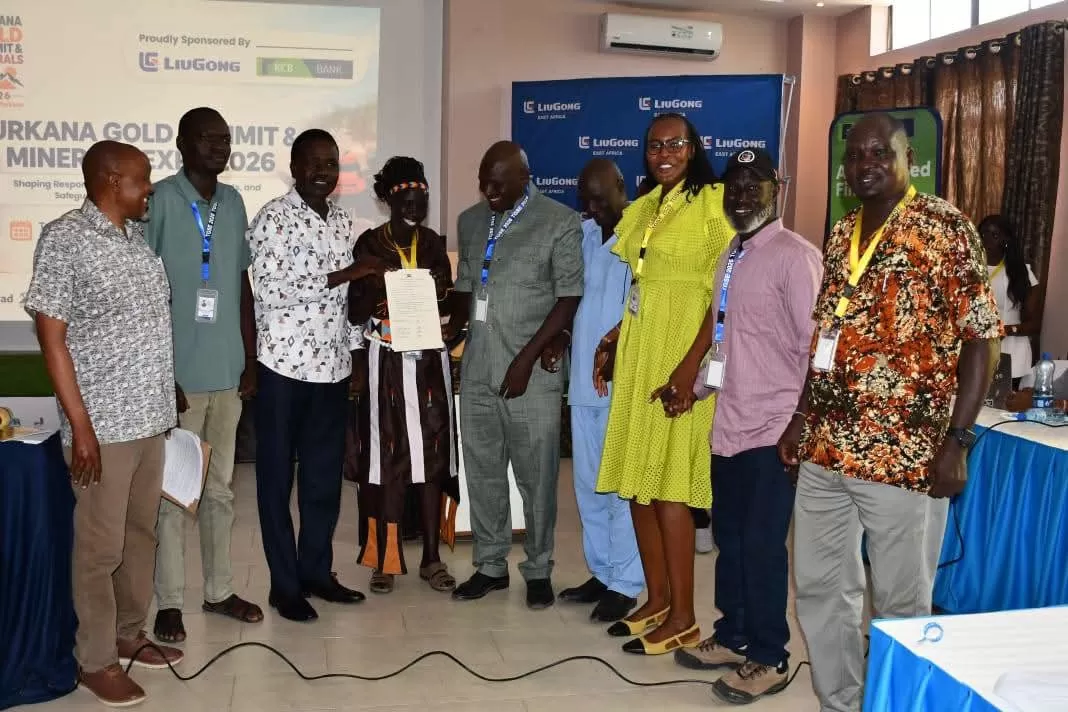
Book a Mid-Article Native AdDesktop: Fluid (728x90) · Mobile: Fluid (300x250)Just days ago, two groups of artisanal miners, Nagetei and Napuslup, received Artisanal Mining Permits under the Mining Act, 2016. The permits were presented by Gregory Kituku, Director of Licensing, Enforcement and Compliance at the State Department for Mining, in the presence of county leaders and other stakeholders in the mining sector.
The significance of that moment goes beyond the issuing of two permits. It signals a shift in how government and communities are beginning to view artisanal mining — from an activity to be pushed underground to an economic sector that can be regulated, supported and connected to legitimate markets.
The more important question is much closer to home: what actually changes for Locheria and Akiru, the men and women digging for gold at places such as Lomeguro, when mining moves from informality into the formal economy?
The answer is quite a lot — but only if formalisation is done properly.
Book a Mid-Article Native AdDesktop: Fluid (728x90) · Mobile: Fluid (300x250)Banks can begin designing financial products for miners and their cooperatives. Equipment suppliers can enter the sector with greater confidence. Government can improve safety oversight and traceability. Legitimate traders can operate without being automatically associated with illicit activity.
Most importantly, Locheria and Akiru can begin to acquire the organisation, skills and bargaining power required to capture more of the value of what they produce.
Turkana's Chief Officer for Minerals and Petroleum, Triza Amoni, says the county is already looking beyond licensing towards traceability and branding, with an ambition to connect Turkana gold from Lomeguro and other mines to high-end international markets.
That ambition matters because gold is not merely a mineral. It is a value chain.
Whoever controls information, finance, processing, trading and access to markets often captures more value than the person who extracts the mineral from the ground.
The experience of Nagetei offers a useful illustration.
Officials of the Nagetei Artisanal Miners Association say their members did not wait for government to solve every problem for them.
“They did their part even when the government was not watching. In fact, they chose to engage the government for assistance when government failed to come to them,” one official said.
According to the association, the miners maintained contact with the local mining officer and adopted safety practices after learning from experiences in Migori and Kakamega. They introduced site inspections before operations and say Nagetei has gone four years without a reported mine collapse, injury or death.
Whether that record can be sustained remains to be seen. But the lesson is important: formalisation is not simply about government issuing permits. It also requires miners to organise themselves, adopt standards and take responsibility for the way they operate.
The contrast becomes sharper at Lomeguro, about 150 kilometres away.
Lomeguro is one of Turkana's best-known gold-mining areas, but remains overwhelmingly informal. Reports of mine collapses, deaths and disputes involving middlemen continue to emerge. Unlike Nagetei, no operator has joined a cooperative society, and formal training remains limited.
The two sites offer a compelling illustration of what formalisation can change, even if they are not, by themselves, proof that formalisation eliminates accidents or exploitation.
There is also a third dimension to the problem at Kalomwae, where reports of informal networks controlling access and trade point to an even more difficult challenge: bringing an established informal economy under accountable institutions.
These differences matter because gold mining is no longer a marginal activity in Turkana.
The County Government estimates that about 15,000 families have turned to gold and precious-stone mining. For a county whose economy has historically depended heavily on pastoralism, the discovery of gold at Kainuk, Nadwat, Aterika, Lomeguro, Kalomwae, Napelilim and other areas has altered the economic landscape.
The scale of the national sector reinforces the point. The State Department for Mining estimates that Kenya produces about 300 kilograms of gold a month, with artisanal miners accounting for more than 90 per cent of production. Much of this activity remains outside the formal economy, limiting traceability, access to finance, government revenue and the ability of miners to negotiate better prices.
Turkana therefore has a choice to make.
It can allow gold mining to remain a collection of isolated pits, middlemen, informal arrangements and precarious working conditions.
Or it can build an organised mining economy in which the person who extracts the gold is not the least powerful participant in the value chain.
But there is an important caveat.
Is formalisation itself the solution to all the challenges facing Locheria and Akiru?
Not necessarily.
A licence does not automatically make a miner prosperous. A formal cooperative can be captured by a few individuals. Machinery can increase production without improving household incomes. Government can collect revenue without necessarily improving miners' safety. And complicated licensing requirements or high costs can push small-scale miners back into informality.
That is why Turkana's formalisation agenda should be judged not simply by the number of permits issued, but by what happens after the permits are issued.
Do Locheria and Akiru become safer?
Do they gain access to affordable finance?
Do the cooperatives they join have transparent leadership and accountable financial systems?
Can they sell through legitimate markets and receive a fairer price?
Can their gold be traced from the pit to the buyer?
Does the county gain revenue from their activities while mining communities see tangible benefits?
And, perhaps most importantly, are Locheria and Akiru protected from displacement by better-capitalised groups once the sector becomes commercially attractive?
These are the questions Turkana must confront now.
County Secretary Ambassador Dr Richard Ekai, who previously served as Principal Secretary in the State Department for Mining, argues that Turkana needs formalisation urgently because the county could become one of Kenya's next major mineral frontiers.
“The sector must be formalized just like the oil, gas and wind energy sectors,” he says.
That ambition is understandable. But the experience of extractive industries also carries a warning: having a valuable resource does not, by itself, guarantee that the communities closest to it will benefit.
The starting point must therefore be the artisanal miner — the many Locherias and Akirus whose livelihoods increasingly depend on what lies beneath Turkana's soil.
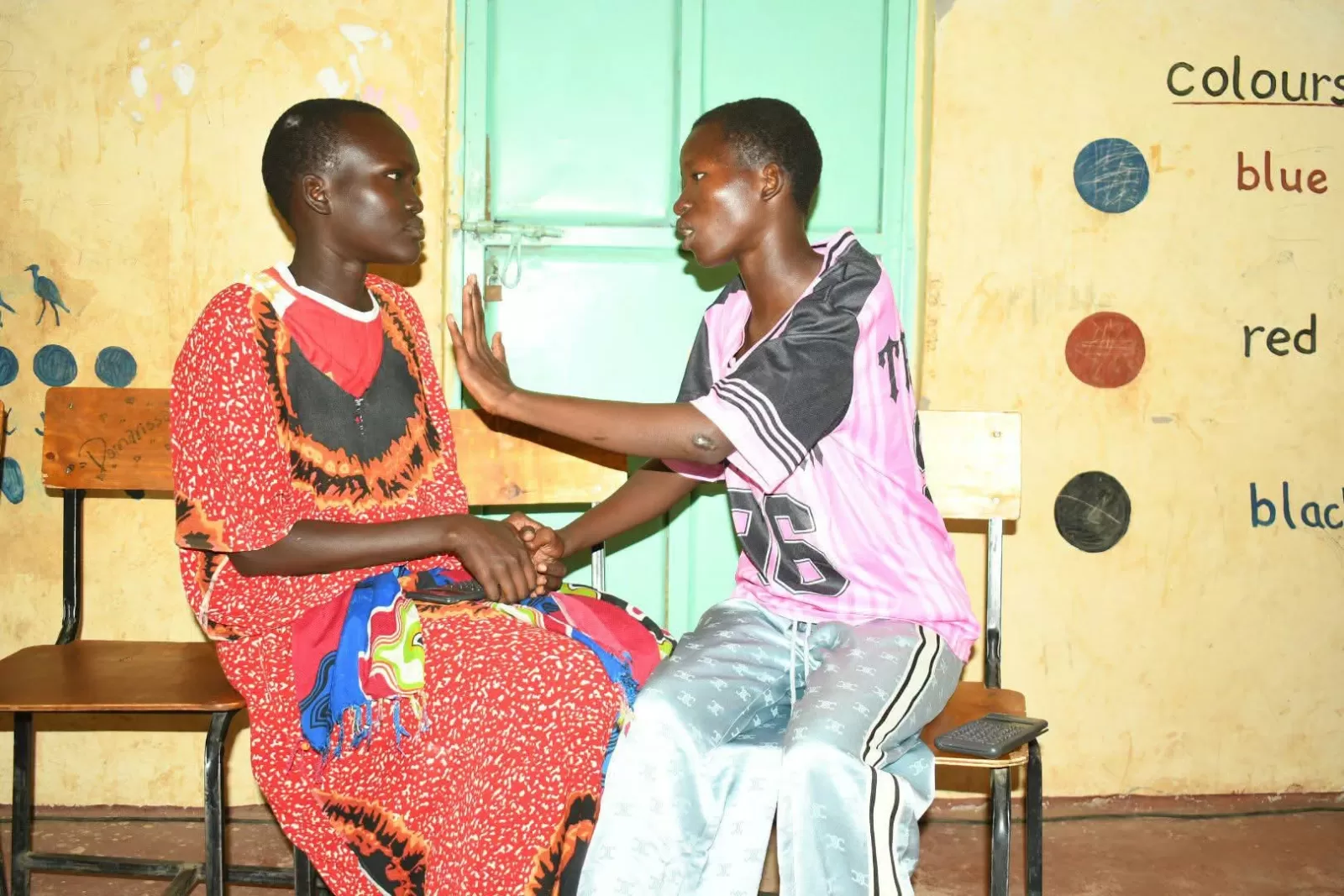
Consider Locheria and Akiru.
They have no formal jobs and few marketable skills. But they have families to support and bills to pay. Pastoralism may no longer be sufficient to meet their needs. A friend tells each of them, separately, that people are making money from gold, and they join the rush.
In an informal mine, they may receive little or no formal training. Their identities and locations may not be recorded. Their production may pass through several middlemen before reaching a buyer. They may have little information about the true value of the gold they extract and, consequently, little bargaining power.
If a mine becomes unsafe, the consequences can be devastating. When an accident occurs, establishing who was working where, who was responsible for the site and what assistance is owed to the family can become extraordinarily difficult.
Now imagine the same two miners operating within a properly organised and accountable system.
They belong to a recognised group or cooperative. Their participation is documented. The mining sites where they operate are subject to safety requirements and inspection. They have access to training, finance and legitimate buyers. Their production can be traced. Insurance and other forms of social protection can be incorporated into the system.
If something goes wrong, their families are not left trying to reconstruct their last known movements through rumours and middlemen.
That is what formalisation should mean.
Not simply a government permit.
Not simply a new tax stream.
Not simply a more convenient way of policing miners.
This is why the question facing Turkana is no longer whether artisanal miners should exist. They already do.
The question is whether the county will allow an increasingly important economic activity to remain informal or build the institutions needed to make it safer, more transparent and more rewarding.
Formalisation must also guard against a new form of exclusion. The people who took the risks when gold mining was informal should not be pushed aside when the sector becomes attractive to larger investors and better-capitalised operators.
Turkana's gold is already in the ground.
The real question is whether the county will continue exporting its value through informality — or build an economy capable of keeping a fairer share of that value at home.
Turkana cannot afford the status quo.
Comments
No approved comments yet. Be the first to join the conversation.