
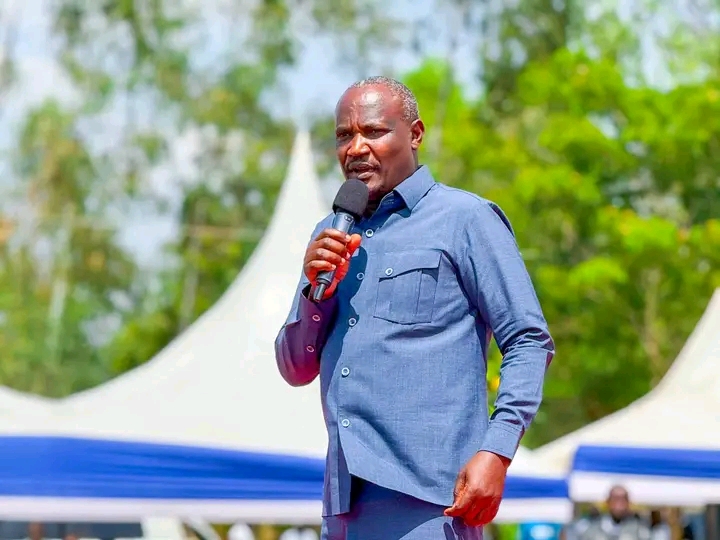
Treasury and Economic Planning Cabinet Secretary John Mbadi has triggered a fresh wave of political conversation after stating that it would be “an injustice” if the Luo community does not produce Kenya’s next president in the 2032 General Election.
Speaking during a public forum on Sunday, July 12, 2026, the CS said the country’s leadership should reflect its diversity, and that after decades of contribution to national politics, the Luo community deserves a chance at the country’s top seat.
Mbadi, a senior figure in government and a prominent leader from Nyanza, framed his comments around fairness, representation, and historical participation in nation-building.
“It would be unjust if the Luo community does not produce a president in 2032,” he said, according to the broadcast.
The Cabinet Secretary did not name a specific candidate. Instead, he spoke broadly about the need for communities that have been active in Kenya’s political, economic, and social life to see themselves reflected in the presidency.
For years, the Luo community has been one of Kenya’s largest voting blocs and has produced influential national leaders, including the country’s first Vice President Jaramogi Oginga Odinga and opposition leader Raila Odinga, who ran for president multiple times. Despite that visibility, no one from the community has yet served as Head of State.
Mbadi’s statement appears to tap into that long-standing aspiration, positioning 2032 as a moment when that gap could finally be closed.
Kenya’s next presidential election is still six years away, but early positioning has already begun in political circles. President William Ruto was elected in 2022 and is eligible to seek a second and final term in 2027.
With term limits set to push President Ruto out in 2032, attention is gradually shifting to who will carry the mantle next. Mbadi’s comments insert the Luo community directly into that conversation, years before formal campaigns begin.
As Treasury CS, Mbadi holds one of the most senior positions in government. His remarks therefore carry weight beyond party politics. They also signal how discussions around inclusivity and regional balance are likely to shape the next decade of Kenyan politics.
Analysts note that Kenyan elections have often been shaped by coalitions built across communities. By raising the issue now, Mbadi may be seeking to rally his base early and push the idea of a Luo presidency into mainstream political debate.
Political observers also noted that Mbadi spoke as a government official, not as a party leader. That has raised questions about how his comments align with the current administration’s broader message of unity and “bottom-up” development.
Mbadi’s remarks touch on a recurring theme in Kenyan politics: the balance of power and representation across the country’s 44+ communities.
Since independence, the presidency has been held by leaders from the Kikuyu, Kalenjin, and Luo communities have come close but not yet held the seat. That history fuels both aspiration and debate.
Proponents of Mbadi’s view argue that leadership should rotate to reflect the country’s diversity. They point to other public offices, the judiciary, and parliament where efforts have been made to ensure regional balance.
Critics counter that Kenya should move beyond “community arithmetic” and focus on competence. They argue that the 2010 Constitution was designed to devolve power and reduce the winner-takes-all nature of presidential politics.
Mbadi did not suggest that only a Luo should run in 2032. His point, as presented, was about fairness and opportunity that it would be unjust for a community so involved in national affairs to never ascend to State House.
As Cabinet Secretary for Treasury and Economic Planning, John Mbadi is at the center of Kenya’s economic policy. He is tasked with managing the budget, debt, taxation, and economic growth strategy at a time when Kenyans are grappling with cost of living pressures.
His decision to speak on political succession while holding a key economic docket shows how intertwined governance and politics remain in Kenya. Even technical ministries often become platforms for broader national conversations.
Mbadi has previously served as ODM Chairman and as Member of Parliament for Suba South. He is regarded as a close ally of Raila Odinga and has been vocal on issues of governance, devolution, and social justice.
It is far too early to predict who will run in 2032. But Mbadi’s statement does two things:
First, it puts the idea of a Luo presidency on the table early. By naming 2032 specifically, he gives the community a timeline to organize around.
Second, it opens space for other communities and leaders to also articulate their aspirations. In Kenyan politics, once one group stakes a claim, others often follow.
The next six years will likely see more of this kind of positioning. Alliances will shift, new leaders will emerge, and parties will test messages. Economic performance, service delivery, and how well the current government meets its promises will also shape who voters trust in 2032.
For now, Mbadi’s comment has ensured that the question of representation will be part of the national conversation long before campaigns officially begin.
Whether Kenyans ultimately vote based on community, policy, or personality remains to be seen. But the Treasury CS has made one thing clear: for him and for many in the Luo community, 2032 is not just another election year. It is an opportunity to right what they see as a historical imbalance.
As the country moves toward the end of President Ruto’s second term, expect more leaders to weigh in on succession, inclusivity, and the future direction of Kenyan politics. Mbadi’s remarks ensure that the Luo community’s aspirations will be part of that debate.

Comments
No approved comments yet. Be the first to join the conversation.