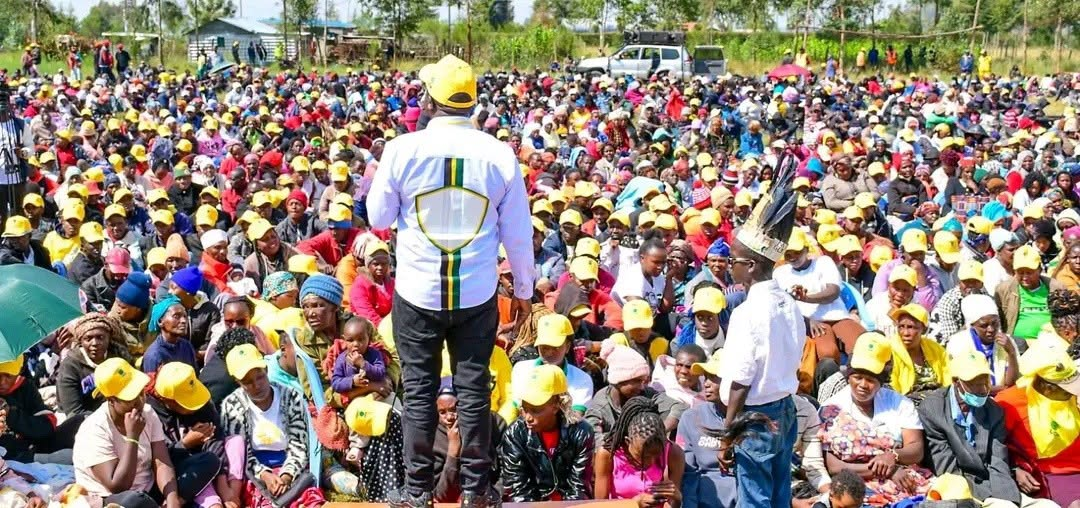
As campaigns close in the Ol Kalou parliamentary by-election, the constituency has become more than a battleground for one vacant seat. It has turned into a political mirror reflecting the uneasy relationship between public development, State power, electoral integrity, and voter freedom.
On Thursday, July 16, residents of Ol Kalou cast their vote to elect a successor to the late David Kiaraho. The race has been narrowed into a high-stakes duel between UDA’s Samuel Muchina Nyagah and DCP’s Sammy Kamau Ngotho.
But the real contest stretches beyond the two names on the ballot. In the public eye, Ol Kalou has become a proxy battle between President William Ruto’s political machinery and former Deputy President Rigathi Gachagua’s new opposition wave. For that reason, a constituency race in Nyandarua has taken on national meaning, especially in the continuing battle for influence in the Mount Kenya region.
By-elections in Kenya rarely remain local for long. They often attract national actors, heavy funding, aggressive messaging, and symbolic interpretations far beyond the constituency involved.
Ol Kalou has followed that familiar path.UDA has deployed senior government allies and political heavyweights to campaign for Muchina, presenting him as the candidate best placed to connect the constituency to government. DCP, on the other hand, has rallied around Ngotho as a symbol of defiance, resistance, and a growing anti-establishment mood associated with Gachagua’s camp.
In ordinary circumstances, this would be a contest of candidates, manifestos, and local priorities. But Ol Kalou has become something larger: a test of who currently commands political emotion in Mount Kenya. The constituency is now being watched not only by voters, but by power brokers, analysts, party strategists, and politicians already calculating the road to 2027.
The most striking feature of the Ol Kalou campaign has not been the speeches. It has been the sudden wave of development activity and government-linked interventions in the constituency.
Residents have seen roads highlighted, water projects launched, gas cylinders distributed, markets opened, digital hubs mentioned, electricity connections promoted, title deeds issued, land services brought closer, fishing boats handed over, and even the revival of passenger rail services celebrated after decades of silence.
No resident should reject water. No farmer should dismiss roads. No family should despise electricity, title deeds, clean cooking energy, a market, or better transport. Ol Kalou deserves development, just like every other constituency in Kenya. But the question many Kenyans are now asking is not whether development is necessary. The question is why it appears to move with unusual speed when an election is around the corner.
Why does government efficiency suddenly become loud, visible, and well-funded when a parliamentary seat is at stake? Why do public services arrive accompanied by campaign speeches, political branding, and appeals to vote in a particular direction? That is where the discomfort begins.
A dangerous political culture has taken root in Kenya: the presentation of public services as personal generosity from leaders. Roads are not gifts from politicians. Water projects are not acts of private kindness. Title deeds are not campaign souvenirs. Gas cylinders funded through public programmes are not party donations. Markets, electricity, digital hubs, and rail services are not rewards for political loyalty.
They are public goods. They are financed through taxes, public borrowing, and national resources. They belong to citizens by right, not by favour. When development is delivered in the heat of campaigns, it becomes difficult for voters to separate genuine public service from political inducement. The line between governance and campaign mobilisation begins to blur. That blur is dangerous because it conditions citizens to treat their own rights as gifts from those in power.A voter should never feel indebted for receiving what the State was already obligated to provide.
UDA’s campaign has been built around the language of connection to the government. The message is clear: elect the ruling party candidate, and Ol Kalou will remain close to the centre of power. It is a practical argument, especially in a country where many voters believe development follows political alignment.
Muchina’s campaign has therefore benefited from the appearance of State-side strength. Government allies have used development projects to demonstrate what they say is delivery, not politics. The strategy is simple and familiar: show voters what power can do, then ask them to vote where power sits. But this approach carries political risk.
If voters feel development is being used to pressure them rather than serve them, the strategy can backfire. Mount Kenya voters have shown before that they can accept services without surrendering their political independence. A voter can receive a title deed, use a road, take a gas cylinder, attend a rally, and still vote against the political message attached to it. That is the quiet danger facing UDA in Ol Kalou.
DCP’s campaign has taken a different path.
Without the advantage of State machinery, it has leaned into emotion, grievance, and political defiance. Ngotho has been presented by his supporters as a candidate standing against a powerful government-backed machine.
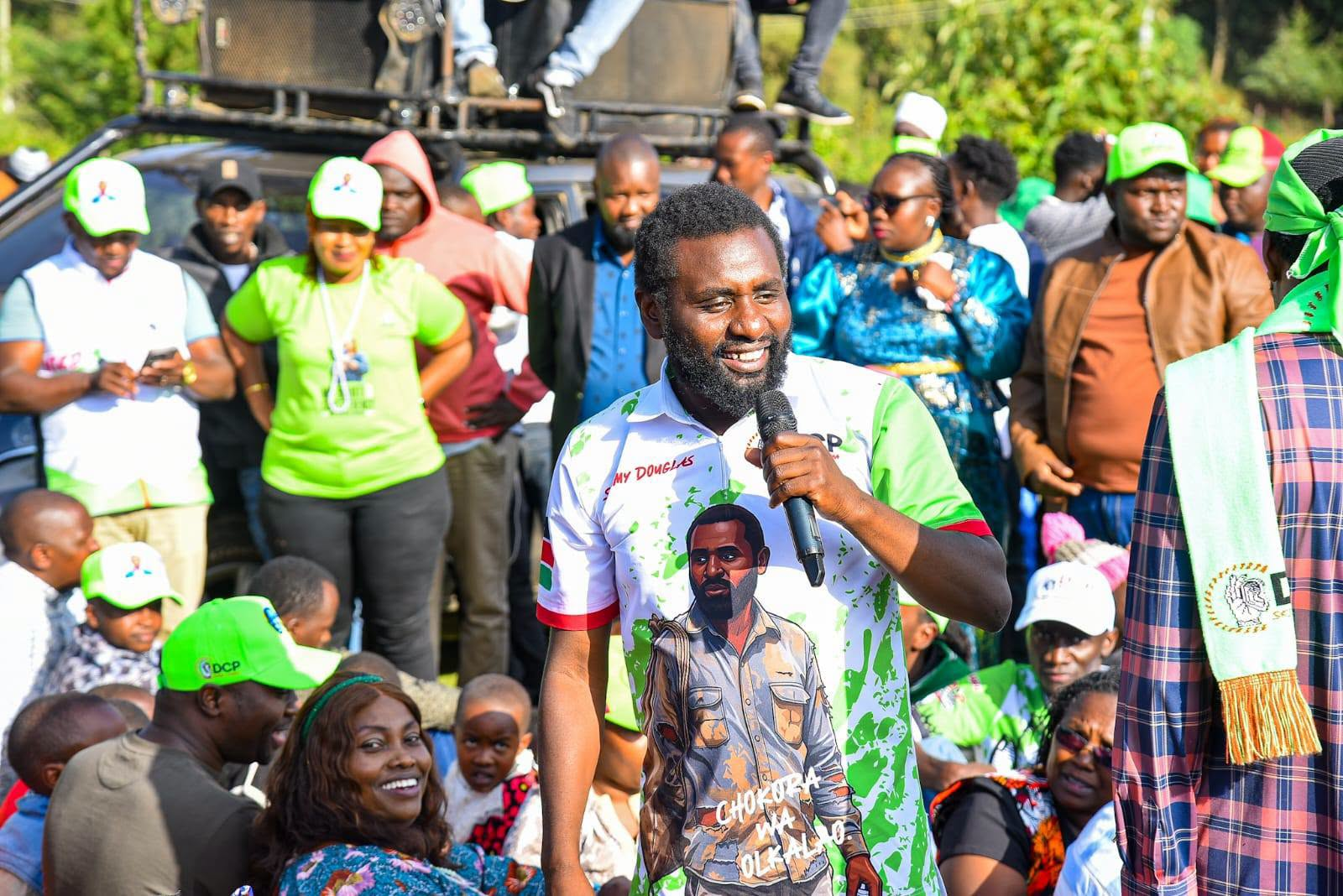
This is where Gachagua’s influence becomes central. His camp is seeking to prove that his political voice in Mount Kenya is not just noise from roadside rallies, but a real force capable of moving votes.
DCP is therefore not merely asking Ol Kalou residents to elect an MP. It is asking them to send a message.
That message is aimed at State power, at UDA, and at the political establishment accused by Gachagua’s allies of disrespecting the region and manipulating the electoral environment.
Whether that message is strong enough to win is the question Thursday’s vote will answer.
Beyond development, the campaign has been clouded by allegations of voter bribery, misuse of public resources, intimidation, night campaigns, and violence. Such claims must always be handled carefully. Allegations are not convictions. Political accusations can be exaggerated, selectively framed, or weaponised by rival camps.
But the concerns in Ol Kalou cannot be dismissed casually. When politicians publicly speak about spending large sums of money in a live campaign environment, voters are entitled to ask what that money is doing. When identity cards and polling stations are mentioned in campaign mobilisation, suspicion deepens. When public resources and partisan campaigns appear to move in the same direction, confidence in the electoral process weakens.
This is why the role of the IEBC has become so important. The Independent Electoral and Boundaries Commission is not on the ballot, but its credibility is being tested. The commission has acknowledged concerns around bribery, violence, night campaigns, and the involvement of senior public officials in the race. It has also taken action against Kipipiri MP Wanjiku Muhia over remarks it found capable of inciting hostility. That action sends an important signal: inflammatory political speech must attract consequences.
But enforcement must be even-handed.IEBC cannot afford to appear firm against one side and hesitant toward another. In a race already charged with national political tension, selective action, or the perception of it, can damage public trust.A referee does not only need to make correct calls. The referee must also be seen to apply the rules equally.
If there is evidence of bribery, it must be investigated. If public officials have crossed legal lines, the commission must act. If claims are false, the public also deserves clarity.
Silence creates rumours. Delay creates suspicion. Uneven enforcement creates anger.
UDA’s candidate has urged residents to reject predictions of violence and maintain the constituency’s history of peaceful elections. That appeal is important.
No election is worth bloodshed. No parliamentary seat is worth the life of a citizen. No political rivalry should turn neighbours into enemies. But peace should not be used as a blanket to cover legitimate questions.
Peace does not mean voters should ignore suspicious cash movements. It does not mean journalists should avoid asking hard questions. It does not mean the IEBC should go soft on violations. It does not mean citizens should accept the use of public resources as campaign tools.
True peace is built on fairness, transparency, and confidence in the rules.
A peaceful election is not one where people keep quiet. It is one where voters are free, institutions are firm, and candidates compete without intimidation or inducement.
The people of Ol Kalou should accept every legitimate public service brought to their constituency.They should use the roads. They should benefit from water projects. They should collect title deeds if they are rightfully theirs. They should welcome electricity, markets, railway services, and clean energy programmes. But they should not treat these services as political debts.
A vote is an instrument of accountability. That is why Ol Kalou voters must approach Thursday’s election with clarity. The key question is not who arrived with the loudest convoy. It is who can serve the constituency after the campaign noise disappears
Voters must ask who understands the constituency. Who can represent them in Parliament with seriousness? Who can follow up development without turning citizens into beggars?
That is the real test
Comments
No approved comments yet. Be the first to join the conversation.