
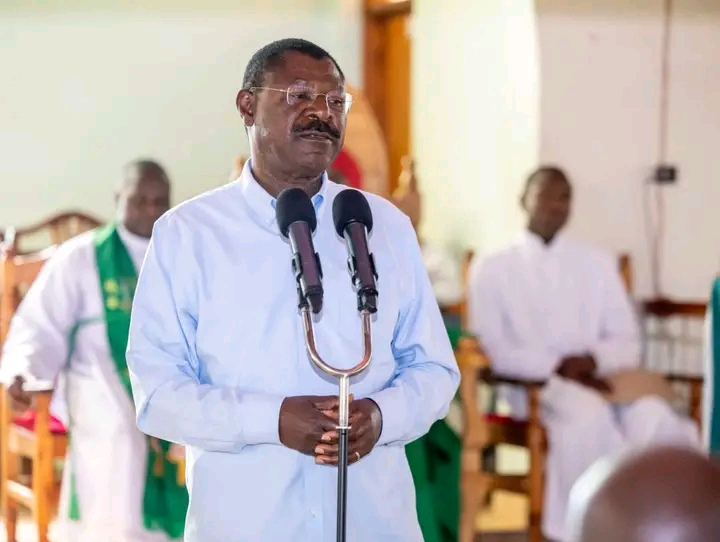
National Assembly Speaker Moses Wetang'ula has made his boldest statement yet on his political future, telling worshippers during a church service today that he intends to succeed President William Ruto as Kenya’s next Head of State.
Speaking to congregants in Bungoma, the Speaker urged residents to continue supporting the current administration, saying it was part of preparing the ground for his own future leadership of the country.
The remarks, made from the pulpit during Sunday service, have set off fresh debate about succession politics within the Kenya Kwanza administration, barely midway into President Ruto’s first term.
The Speaker said he will take over from President Ruto when his term comes to an end, and called on the people of Bungoma to stand firmly behind the President in the meantime.
He framed the appeal for support of the Kenya Kwanza government as a necessary step in laying the foundation for his own bid, asking his home county to remain united and loyal to the current leadership as they “prepare for his future leadership.”
Church services have become a common platform for Kenyan politicians to make major announcements and test public reaction, and Wetang'ula’s declaration followed that pattern. With clergy and community members in attendance, the Speaker used the forum to connect his national ambitions to local support.
Moses Wetang'ula is one of Western Kenya’s most senior politicians. He currently serves as Speaker of the National Assembly, a constitutionally powerful office that requires him to remain non-partisan in the running of Parliament.
Before his election as Speaker in 2022, he was Bungoma Senator and has also served as Foreign Affairs Minister and Leader of Minority in the Senate. He is also the party leader of Ford-Kenya, one of the constituent parties in the Kenya Kwanza coalition.
His political base has traditionally been Bungoma and the wider Luhya community. Over the years he has made several attempts at national office, including a presidential bid in 2013. Today’s statement marks the most direct way he has put his presidential intentions on record.
By linking his future ambition to continued support for President Ruto, Wetang'ula appears to be positioning himself as a loyal successor within the current government arrangement, rather than as an opponent.
The choice of Bungoma for the announcement was deliberate. As his political backyard, the county is expected to be the bedrock of any national campaign he mounts.
Wetang'ula’s message to residents was twofold: first, remain supportive of President Ruto and the Kenya Kwanza agenda on development, agriculture, and economic programs. Second, view that support as an investment in a future Wetang'ula presidency.
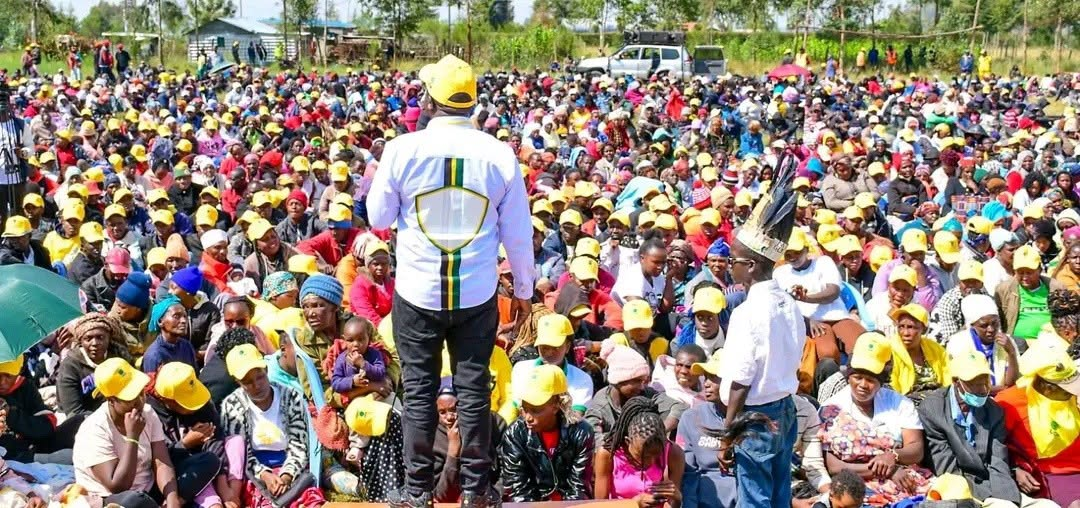
Western Kenya remains a key battleground in national elections. With a large voting bloc, the region has often been courted by presidential candidates. By speaking directly to his people in church, Wetang'ula was seeking to consolidate that base early and frame himself as the community’s next candidate for the top seat.
Political analysts note that early positioning is common in Kenyan politics, even when the next presidential election is still years away. Declaring intent now allows leaders to start building alliances and testing messaging.
President William Ruto was elected in 2022 for a five-year term and is eligible to seek a second term in 2027. The Constitution limits a president to two terms.
Wetang'ula’s statement introduces an early conversation about who might carry the Kenya Kwanza mantle after Ruto. While the President has not publicly endorsed a successor, members of the administration have often spoken about continuity and defending the government’s legacy.
The Speaker’s remarks suggest he sees himself as part of that continuity. By urging Bungoma residents to support Ruto now, he is arguing that loyalty to the current administration should translate into support for him later.
This kind of early succession talk can have implications within the coalition. Other senior leaders in Kenya Kwanza, including Deputy President Kithure Kindiki and other regional kingpins, are also seen as potential 2032 contenders. Wetang'ula’s public declaration may therefore shape internal dynamics in the coming years.
The church service drew attention online shortly after it ended, with the clip and summary of the Speaker’s remarks circulating widely.
In Bungoma, residents had mixed reactions. Some welcomed the announcement as a sign that one of their own is aiming for the presidency and that the region should rally behind him. Others questioned the timing, noting that the focus should remain on service delivery under the current government.
The fact that the declaration was made in church also sparked discussion. In Kenya, politicians frequently use places of worship to reach voters, but critics argue that such forums should be reserved for spiritual matters. Supporters counter that churches are community spaces where leaders can speak directly to the people.
As Speaker of the National Assembly, Wetang'ula holds a position that is expected to be above party politics. His primary duty is to preside over Parliament, ensure order, and protect the institution’s independence.
However, Kenyan Speakers have historically remained active in politics outside the chamber. Wetang'ula’s statement today shows he is also looking beyond his current constitutional role toward 2032 and beyond.
Whether his presidential ambition affects the perception of his neutrality in Parliament will likely be a subject of discussion among MPs and political commentators in the coming days.
Wetang'ula did not give a detailed policy platform during the church service. The focus was on the declaration itself and the call for continued support for President Ruto.
What is clear is that the Speaker has put his name forward early as a potential successor. Between now and the next election cycle, he will need to build a national profile beyond Western Kenya, strengthen alliances within Kenya Kwanza, and articulate a vision that resonates beyond his home base.
For President Ruto, the statement is a reminder that conversations about the future of the administration have already begun, even as the government pushes its current agenda on housing, health, agriculture and digital economy.
As Kenya’s political calendar gradually moves toward 2027 and then 2032, expect more leaders to start testing the waters. Wetang'ula’s church declaration today ensures that his name is firmly in that conversation.

Comments
No approved comments yet. Be the first to join the conversation.