
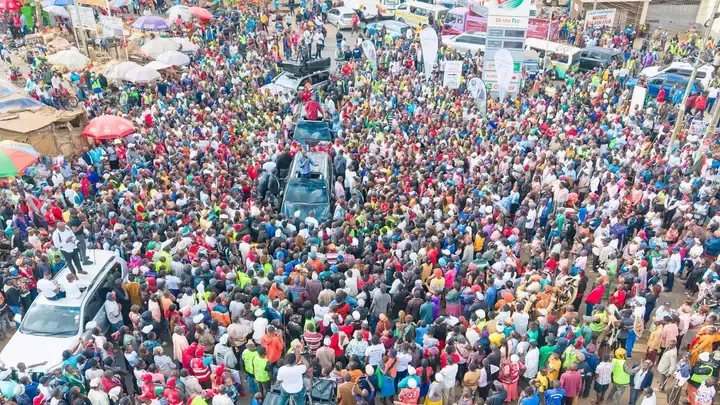
Kenya’s Political Temperature Rises as 2027 Looms Opposition rallies, security concerns and economic frustrations expose deepening fault lines ahead of the next General Election NAIROBI, September 13, 2026 — Kenya’s political temperature is rising, with opposition mobilisation, disputes over public gatherings and growing concerns about political violence placing the country’s democratic institutions under renewed scrutiny.
The latest flashpoint is Nairobi, where the Linda Mwananchi movement is scheduled to hold a major rally at Jacaranda Grounds on Sunday. The gathering has attracted national attention, not only because of the political figures involved, but also because of the wider questions it raises about the space available for opposition activity as the 2027 General Election approaches.
The movement’s leaders have maintained that Kenyans have a constitutional right to assemble peacefully and express their political views. Security authorities, meanwhile, have emphasised the need to maintain public order and manage competing public gatherings.
Book a Mid-Article Native AdDesktop: Fluid (728x90) · Mobile: Fluid (300x250)The disagreement has brought an old but unresolved question back to the centre of Kenya’s political debate: where does the protection of public order end, and the protection of democratic freedoms begin? Rally dispute exposes wider political fault lines The Nairobi rally comes amid increasingly competitive political mobilisation across the country.
Leaders associated with Linda Mwananchi have been seeking to build support through nationwide engagements, presenting the movement as an alternative political force ahead of the next election. But the movement’s activities have also exposed tensions over the organisation of public gatherings. Governor George Natembeya has argued that organisers should notify police rather than seek permission to exercise their constitutional rights.
Authorities, however, have cited notification requirements and the need to coordinate gatherings where venues and dates overlap. The dispute is more than a disagreement over a rally venue. It reflects the broader challenge of ensuring that political competition remains open while preventing public gatherings from becoming flashpoints for confrontation.
Fears of violence return to the political conversation Concerns about political violence have intensified following reports of attacks during opposition and civil society activities. Human Rights Watch has reported attacks by unidentified armed groups on gatherings in the months leading up to the 2027 elections, including incidents in which people were reportedly killed or injured. The organisation has called for transparent investigations and stronger protection of political rights.
Book a Mid-Article Native AdDesktop: Fluid (728x90) · Mobile: Fluid (300x250)The reports have raised questions about whether political actors and security agencies are doing enough to prevent violence before it escalates. Yet the allegations also underline the importance of evidence. Claims about who organised or financed particular attacks must be investigated and established through credible processes, rather than allowed to become fuel for further political confrontation.
Opposition unity remains uncertain While opposition leaders continue to criticise the government, their own political future remains unsettled. The Orange Democratic Movement has denied plans to hold a separate Nairobi rally on the same day as the Linda Mwananchi gathering, saying it is focused on rebuilding its grassroots structures and preparing its political programme.
The development highlights the uncertainty within opposition politics. Whether emerging movements will cooperate with established parties, compete for the same supporters or eventually form alliances could significantly shape the 2027 contest. For voters, the question is increasingly whether political leaders will offer a clear alternative programme—or allow personality clashes and competing ambitions to dominate the national conversation.
Economic frustrations add pressure Political tensions are unfolding as many Kenyans continue to grapple with the cost of living, unemployment and uncertainty over economic opportunities. Economic concerns have increasingly become part of political mobilisation, with opposition leaders using public frustrations to challenge government policies and performance.
The government, for its part, continues to defend its economic record and development agenda. Recent controversy surrounding government measures affecting foreign traders has also demonstrated how economic policy can quickly become a political issue.
Concerns raised by East African nationals and rights groups have added to the pressure on authorities to balance regulation, employment interests and regional relations. As the election approaches, economic frustrations are likely to remain a major factor in how Kenyans judge political leadership.
A test for Kenya’s democratic institutions The latest tensions present a test not only for politicians, but also for the institutions responsible for protecting democratic participation. Political parties and movements have a responsibility to organise peaceful activities, avoid inflammatory rhetoric and respect the law. Security agencies, equally, must protect public safety while ensuring that their actions do not unnecessarily restrict legitimate political expression.
The judiciary, electoral institutions, civil society and the media will also play an important role in ensuring that political disagreements are handled through lawful and democratic channels. Kenya’s history shows that political competition can become dangerous when institutions are weakened, public trust declines and leaders treat opponents as enemies rather than fellow participants in democracy. The road to 2027 With the next General Election approaching, the country is entering a period in which political alliances will shift, new movements will emerge and established parties will face pressure to redefine their strategies.
The immediate challenge is to ensure that rallies, political campaigns and public disagreements do not become triggers for violence. The longer-term challenge is to rebuild confidence that every Kenyan can participate in politics without intimidation, discrimination or fear.
Kenya’s political future will not be determined by the volume of rallies alone, but by whether its leaders and institutions can manage disagreement without allowing it to threaten the country’s democratic stability.



Comments
No approved comments yet. Be the first to join the conversation.