
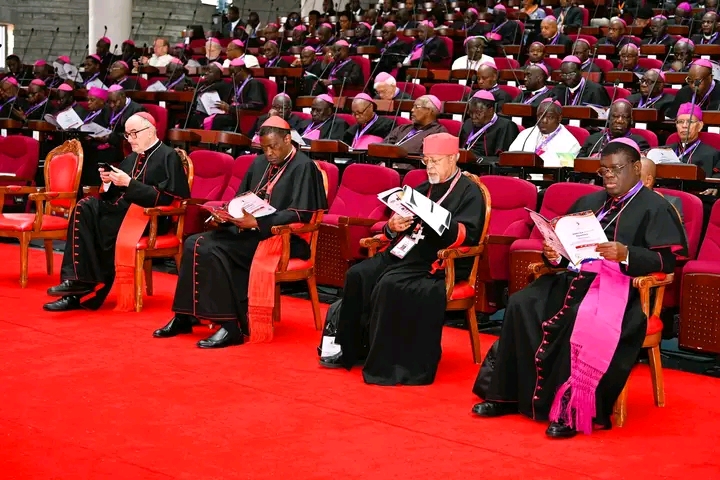
On Monday morning, July 20, 2026, the Catholic University of Eastern Africa in Nairobi became the focal point for Church leadership across Eastern Africa as the 21st Plenary Assembly of the Association of Member Episcopal Conferences in Eastern Africa officially opened. For one week, bishops and delegates from across the region will gather at CUEA to reflect on the Church’s mission, share experiences from their dioceses, and discern a shared direction for pastoral and social engagement in a region undergoing fast demographic and economic shifts. The opening carried a tone of both reverence and purpose, with participants aware that the decisions and reflections of this week will resonate far beyond the university walls and into the communities served by the Church.
Representing the Government of Kenya at the ceremony was Prime Cabinet Secretary Hon. Musalia Mudavadi, who delivered the keynote address on behalf of President Dr. William Samoei Ruto. In his speech, Mudavadi acknowledged the long history of cooperation between the Catholic Church and the state in Kenya and across Eastern Africa. He described that relationship as one built on mutual trust and a common commitment to human wellbeing. Much of that cooperation, he said, is visible in everyday services. Catholic schools have for generations given children in cities and rural areas access to education. Catholic health facilities have provided care to people regardless of background, often filling gaps where public resources are limited. Beyond those institutions, the Church has also invested in programs that strengthen families, promote livelihoods, and uphold human dignity. Mudavadi noted that this work has helped to anchor development at the grassroots and that the government values the Church as a consistent partner in delivering essential services.
The Prime Cabinet Secretary also highlighted the theme chosen for this year’s plenary, which places young people at the center of the Church’s reflection. He called the focus timely and necessary, given that youth make up the majority of the population across Eastern Africa. Their creativity shapes culture, their ideas influence innovation, and their needs drive much of the conversation around education, jobs, and civic life. At the same time, Mudavadi observed, young people face real pressures, including unemployment, limited economic opportunities, the effects of digital media, migration, and changing social expectations. By choosing to deliberate on these realities, the Church was signaling its intent to listen more closely and to respond with programs and pastoral approaches that are relevant to the lives young people are actually living. Mudavadi encouraged the assembly to produce concrete guidance that parishes, schools, and community initiatives could use in the years ahead, reminding the bishops that any vision for the region’s future must start with those who will carry it forward.
Book a Mid-Article Native AdDesktop: Fluid (728x90) · Mobile: Fluid (300x250)Nairobi’s role as host added further meaning to the gathering. Nairobi Governor Johnson Sakaja welcomed the delegates to the capital and expressed appreciation that Kenya had once again been chosen for a regional Church meeting of this magnitude. He described Nairobi as a city where faith, culture, and public life meet daily, and he assured visitors of the county’s support throughout the week. His remarks reflected a broader pattern of Kenya serving as a meeting place for regional dialogue, both ecclesial and diplomatic. For many of the bishops, arriving in Nairobi also meant an opportunity to reconnect with colleagues they see only during these plenary sessions, to compare notes on evangelization, formation, justice, and service, and to find common ground despite differences in language and local context.
While the AMECEA plenary does not function as a political legislature, it carries significant moral and pastoral influence. It brings together episcopal conferences from several countries to discern together how the Church can witness to the Gospel in a region marked by both opportunity and persistent challenges. Over the coming days at CUEA, discussions are expected to touch on faith formation, the role of laypeople, peacebuilding, governance, and integral human development. Reports from member conferences, input from experts, and the lived experience of bishops will all inform the conversation. The emphasis on youth suggests that a key thread will be how Catholic institutions can create more space for young people to lead and to be heard, rather than viewing them only as beneficiaries of programs.
The timing of the 2026 assembly makes it especially relevant. Eastern Africa continues to navigate transitions that affect families, education systems, and labor markets. At the same time, the Catholic Church remains one of the largest providers of schools, health centers, and social services outside of government. That reach gives Church leaders a close view of community needs, but it also places a responsibility on them to ensure that institutions stay responsive, inclusive, and grounded in Catholic social teaching. Mudavadi’s acknowledgment of the Church’s partnership was therefore more than formal courtesy. It was a recognition that collaboration between Church and state in education and health continues to make a tangible difference in communities across the region.
The opening also set a clear tone of cooperation. With a senior government official presiding and local leadership present to welcome guests, the event communicated that the Church’s mission unfolds in dialogue with the wider society. That matters in a context where trust between institutions and citizens must be continually nurtured. For the delegates, the week ahead will involve prayer, study, and honest discussion, but also listening across borders and to the people they serve. The focus on young people is expected to shape recommendations on formation, vocations, digital engagement, and accompaniment during times of uncertainty.
Book a Mid-Article Native AdDesktop: Fluid (728x90) · Mobile: Fluid (300x250)As deliberations begin, the outcomes of the plenary will be watched not only within Catholic circles but also by government agencies, civil society groups, and educational partners who work alongside the Church. The gathering in Nairobi is a reminder that religious institutions in Eastern Africa continue to play a public role that extends well beyond worship, and that their reflections on social realities can influence policy and practice. With bishops and delegates now seated together for a week of discernment, the hope expressed at the opening was that the assembly would offer guidance that remains faithful to the Gospel while staying close to the lived experiences of people, particularly the young majority whose future will shape the next chapter for Eastern Africa.
Comments
No approved comments yet. Be the first to join the conversation.