
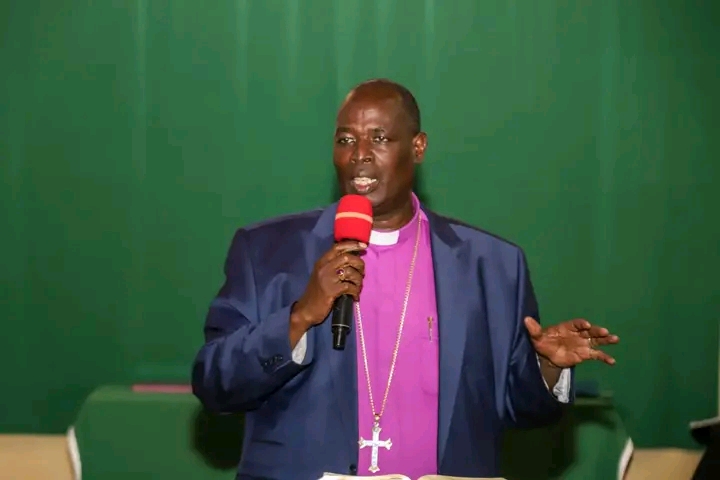
Archbishop Jackson Ole Sapit has faulted the government over what he described as laxity in dealing with criminals and insecurity, saying authorities have failed to act decisively against those responsible for the attack on All Saints Cathedral last month. Speaking during a church consecration service held at the same cathedral in Nairobi, the Anglican Church of Kenya Primate expressed disappointment that more than a month after the incident, no arrests had been made and those who orchestrated the invasion had not been held accountable.
The incident at All Saints Cathedral occurred in June and drew widespread condemnation from religious leaders and members of the public. The cathedral, one of the oldest and most prominent Anglican churches in the country, was stormed during a service, an act that the Archbishop said violated not only the law but also the sanctity of a place of worship. In his remarks, Archbishop Ole Sapit noted that places of faith should remain safe spaces for reflection, prayer and community, and that any attack on them amounts to an attack on the values that hold society together. He questioned why, despite public outcry and promises of investigations, there had been no visible progress in bringing the perpetrators to justice. According to him, the silence and inaction from relevant authorities sends the wrong message that such acts can occur without consequence.
The Archbishop further linked the lack of accountability to a broader problem of impunity in the country. He argued that when crimes are committed and ignored, it emboldens others to act outside the law, and over time this erodes public confidence in institutions that are meant to protect citizens. He called on the government to demonstrate political will and ensure that investigations are concluded swiftly, and that both those who carried out the attack and those who may have sponsored it face the law. For him, justice delayed is justice denied, and the faithful deserve to see that their safety and the safety of their places of worship are taken seriously.
Book a Mid-Article Native AdDesktop: Fluid (728x90) · Mobile: Fluid (300x250)In addition to addressing the cathedral attack, Archbishop Ole Sapit also spoke about the recent by-election in Ol Kalou, where he said there were serious irregularities that marred the process. He condemned the violence and disorder that characterized the exercise, warning that if such incidents are allowed to continue unchecked, they could set a dangerous precedent ahead of the next general election. He described the scenes witnessed in Ol Kalou as unfortunate and unnecessary, and said they reflect a deeper problem in how elections are managed in some parts of the country.
The Primate cautioned that the country appears to be heading in the wrong direction if the lessons of past elections have not been learnt. He reminded leaders that credible, peaceful and transparent elections are the foundation of democracy, and that any attempt to undermine them threatens national stability. He urged the electoral body, security agencies and political actors to take early steps to prevent a repeat of the chaos seen in Ol Kalou, noting that the general election is a much larger exercise and the stakes are higher. According to him, Kenyans are watching closely and expect that mistakes made in smaller polls will not be replicated on a national scale.
Archbishop Ole Sapit emphasized the role of the church in speaking truth to power and in defending the rights of ordinary citizens. He said the church cannot remain silent when injustice occurs, whether it is in the form of insecurity, corruption, or electoral malpractice. The church, he noted, has a moral duty to guide the nation and to hold leaders accountable, not out of hostility but out of love for the country and concern for future generations. He encouraged Kenyans to remain vigilant and to demand better from those in leadership, while also praying for peace and unity.
During the consecration service, the Archbishop also reflected on the mission of the church in a time of social and political uncertainty. He said the church must continue to be a place of hope, healing and reconciliation, especially when the wider society is experiencing tension. He urged the congregation at All Saints to remain steadfast in faith despite the challenges, and to be agents of peace in their communities. The event to consecrate parts of the cathedral was attended by clergy, church elders and members of the public, and was marked by prayers for the nation.
Book a Mid-Article Native AdDesktop: Fluid (728x90) · Mobile: Fluid (300x250)The remarks by the ACK leader come at a time when concerns about security and electoral preparedness are growing ahead of the 2027 general election. Various civil society groups and religious institutions have been calling for early reforms and for a commitment from the state to ensure that every Kenyan can exercise their democratic rights without fear of intimidation or violence. The attack on All Saints Cathedral remains a sensitive issue because it targeted a central place of worship in the capital and raised questions about the protection of religious institutions.
By speaking out, Archbishop Ole Sapit has added his voice to those demanding answers and action. He made it clear that the church expects the government to move beyond statements and to take concrete steps. For him, the credibility of the state is tested not just in big policy announcements, but in how it responds to specific incidents that affect citizens directly. The failure to arrest and prosecute those behind the cathedral invasion, he argued, undermines trust and suggests that some people are above the law.
On the issue of elections, the Archbishop’s warning was equally firm. He said that the problems witnessed in Ol Kalou, including reports of disruption and disorder, should serve as an early warning. If left unaddressed, similar incidents could escalate and compromise the integrity of the 2027 polls. He called for civic education, for security agencies to be neutral and professional, and for political leaders to tone down rhetoric that incites division.
In closing, Archbishop Ole Sapit reiterated that Kenya has made progress over the years and should not slide back. He expressed hope that through dialogue, accountability and respect for the rule of law, the country can navigate its current challenges. He urged leaders at all levels to put the interests of the people first and to remember that leadership is a responsibility, not a privilege. As the church continues its work of service, he said, it will keep praying for the nation and will also continue to speak out when necessary, because silence in the face of wrongdoing would amount to complicity.Archbishop Jackson Ole Sapit has criticized the government for failing to take action against those responsible for the June attack on All Saints Cathedral in Nairobi, saying the lack of arrests more than a month later reflects laxity in addressing insecurity and impunity. Speaking during a consecration service at the cathedral, the ACK Primate warned that inaction sends a dangerous message that such violations can occur without consequence, and called for swift investigations and prosecution of both the perpetrators and those who may have sponsored them. He also condemned irregularities and violence witnessed during the Ol Kalou by-election, cautioning that if such incidents are not addressed, they could undermine the credibility of the 2027 general election. The Archbishop urged the electoral body, security agencies, and political leaders to ensure peaceful, transparent polls, and reaffirmed the church’s role in speaking out against injustice while calling on Kenyans to demand accountability from their leaders.



Comments
No approved comments yet. Be the first to join the conversation.