
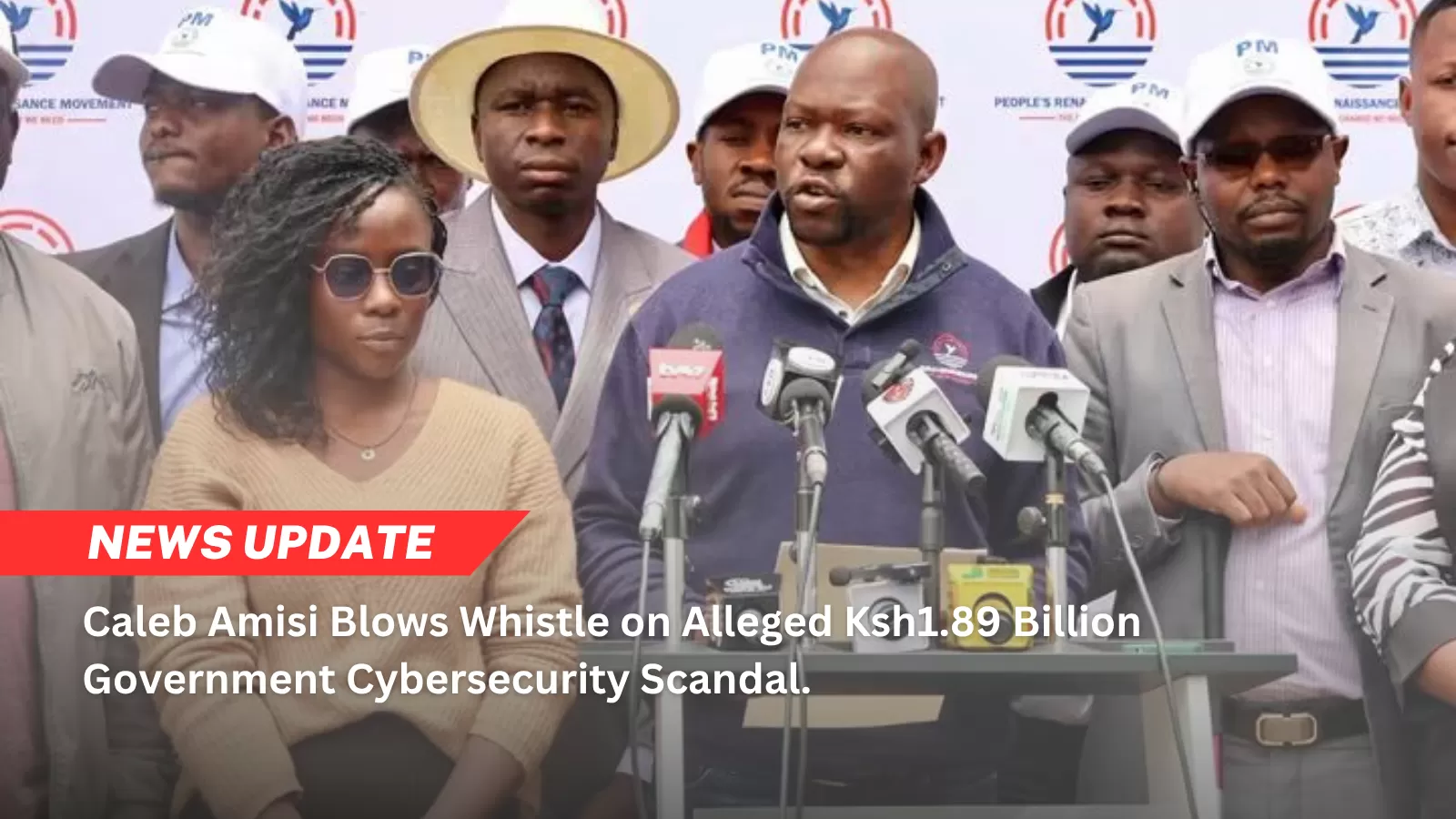
Saboti Member of Parliament Caleb Amisi has raised concerns over what he describes as a looming Ksh1.89 billion scandal involving the alleged payment of millions of shillings by government institutions for the maintenance of government domain and email security.
Amisi claims that government institutions have been directed to pay approximately Ksh4.7 million each for services related to the maintenance and security of government domains and official email systems. According to the legislator, the directive could result in taxpayers spending more than Ksh1.89 billion if the reported charges are applied across the affected public institutions.
The Saboti MP has questioned the justification for what he considers an unusually high expenditure, particularly at a time when the government is under pressure to reduce wastage and ensure prudent management of public funds.
Book a Mid-Article Native AdDesktop: Fluid (728x90) · Mobile: Fluid (300x250)In a statement, Amisi also linked the alleged expenditure to the reported hacking of the State House website in July, suggesting that the incident may have been used to create a justification for increased spending on government cybersecurity.
“I have reliable information to believe that the story about the State House website being hacked into in July was a hoax meant to pave way for this scandal,” Amisi alleged.
The legislator, however, did not provide publicly verifiable evidence to substantiate his claim that the reported cyberattack was deliberately staged.
Amisi described the alleged expenditure as “blatant theft of public money”, arguing that the amount being demanded from government institutions appears excessive when compared with the cost of ordinary domain-related services available in the market.
Book a Mid-Article Native AdDesktop: Fluid (728x90) · Mobile: Fluid (300x250)According to the MP, basic domain maintenance services can cost less than Ksh5,000, raising questions over how the reported Ksh4.7 million charge was arrived at and what specific services are included in the proposed expenditure.
He has consequently called for greater scrutiny of the alleged payments, urging relevant government agencies and oversight institutions to establish whether the expenditure is justified, competitively procured and compliant with public finance and procurement regulations.
Amisi further condemned what he termed “budgeted corruption”, warning that the alleged expenditure could place an unnecessary burden on taxpayers if proper safeguards are not put in place.
“We condemn this budgeted corruption in totality. Kenya needs a renaissance!” Amisi said.
The allegations come amid growing public debate over government spending, procurement and the management of taxpayer-funded projects. Questions have also emerged over the extent of cybersecurity investment required to protect official government communication systems from increasingly sophisticated cyber threats.
However, the claims made by Amisi have not been independently verified. Key details, including the existence and terms of the alleged directive, the number of institutions affected, the identity of the service provider, the procurement process used and the specific cybersecurity services covered by the reported Ksh4.7 million charge, remain unclear.
Relevant government agencies are expected to clarify the matter and explain the basis of the reported expenditure. Such clarification would help establish whether the charges represent legitimate cybersecurity and email security costs or whether, as alleged by Amisi, public funds are at risk of being improperly spent.
Until supporting documentation and responses from the relevant authorities are made public, the Ksh1.89 billion figure and the allegations surrounding the State House website incident remain claims requiring further investigation and verification.


Comments
No approved comments yet. Be the first to join the conversation.