
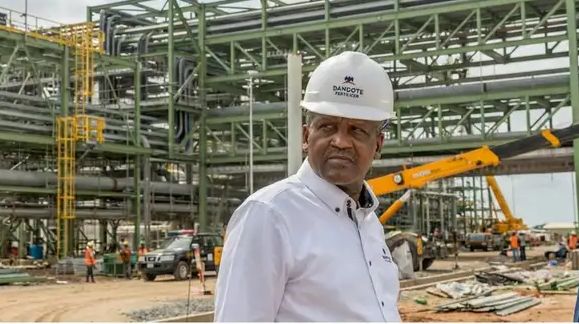
NAIROBI, Kenya 6 July 2026, Dangote Group has selected Kenya as the host country for a planned Ksh2.2 trillion oil refinery aimed at serving the wider East African market, in what could become one of the largest private energy investments in the region’s history.
The announcement, signals a major step for Kenya’s ambition to become a petroleum processing and distribution hub for East Africa. While the final location is yet to be confirmed, coastal counties including Mombasa and Lamu are reportedly under consideration.
The move by Africa’s largest cement and diversified manufacturing group comes as governments across the region grapple with fuel import costs, foreign exchange pressure, and growing demand for refined products.
Book a Mid-Article Native AdDesktop: Fluid (728x90) · Mobile: Fluid (300x250)According to the information provided, the Dangote Group is moving forward with plans to establish a large-scale refinery in Kenya. The projected investment of Ksh2.2 trillion approximately $17 billion would position the facility among the biggest single private-sector projects ever undertaken in East Africa.
The proposed plant is expected to process crude oil and produce key products including petrol, diesel, jet fuel, and other petroleum by-products for domestic use and export to neighboring countries such as Uganda, Tanzania, Rwanda, South Sudan, and the Democratic Republic of Congo.
Industry analysts say the investment aligns with Dangote’s strategy of expanding its energy footprint beyond Nigeria. The group already operates the Dangote Refinery in Lekki, Nigeria a 650,000 barrels-per-day facility that began operations in recent years and has been touted as one of the largest single-train refineries in the world.
By replicating that model in Kenya, Dangote would be tapping into a regional market of more than 300 million people, where demand for fuel continues to rise due to population growth, infrastructure projects, and expanding transport and logistics sectors.
Book a Mid-Article Native AdDesktop: Fluid (728x90) · Mobile: Fluid (300x250)Kenya emerged as the preferred destination after months of regional assessment, sources familiar with the discussions indicated. Several factors likely influenced the decision.
First, Kenya’s strategic coastal position gives it direct access to international shipping lanes through the Port of Mombasa. The port already handles the bulk of petroleum imports for East Africa and has existing pipeline and storage infrastructure that could be expanded to support a refinery.
Second, the Lamu Port-South Sudan-Ethiopia Transport Corridor, or LAPSSET, offers an alternative site with deep-water capacity and room for large industrial development. Government officials have previously pitched Lamu as an ideal location for heavy industry and energy projects.
Third, Kenya’s relatively stable regulatory environment, skilled workforce, and role as East Africa’s financial and logistics center make it an attractive base for a multinational project of this scale.
A government official who spoke on condition of anonymity said talks with Dangote representatives have been ongoing, and that Kenya is keen to fast-track approvals and incentives to secure the investment.
“We are positioning Kenya as the energy gateway for the region,” the official said. “A refinery of this magnitude would reduce our import bill, create jobs, and make fuel more affordable across East Africa.”
If delivered, the refinery could have far-reaching economic implications.
Jobs and Skills:Construction alone is expected to employ tens of thousands of workers over several years. Once operational, the plant would require engineers, technicians, and support staff, while also creating opportunities in ancillary sectors such as transport, maintenance, and petrochemicals.
Fuel Security:Kenya currently imports all its refined petroleum products. A local refinery would reduce dependence on imports from the Middle East and India, improve supply reliability, and potentially cushion consumers from global price volatility.
Foreign Exchange:Fuel imports account for one of Kenya’s largest foreign exchange expenditures. Producing locally would ease pressure on the shilling and help conserve dollars for other critical imports.
Regional Trade: With the African Continental Free Trade Area in effect, a Kenyan refinery could export refined products duty-free to other member states, strengthening Kenya’s position as a manufacturing and trade hub.
“A domestic refinery changes the entire fuel value chain. It reduces transit costs, gives us pricing leverage, and allows us to negotiate crude supply deals directly,” she noted.
The Dangote Group, founded by Africa’s richest man Aliko Dangote, has built a reputation for executing large infrastructure projects. Beyond cement, the group has interests in sugar, salt, flour, and now energy.



Comments
No approved comments yet. Be the first to join the conversation.