
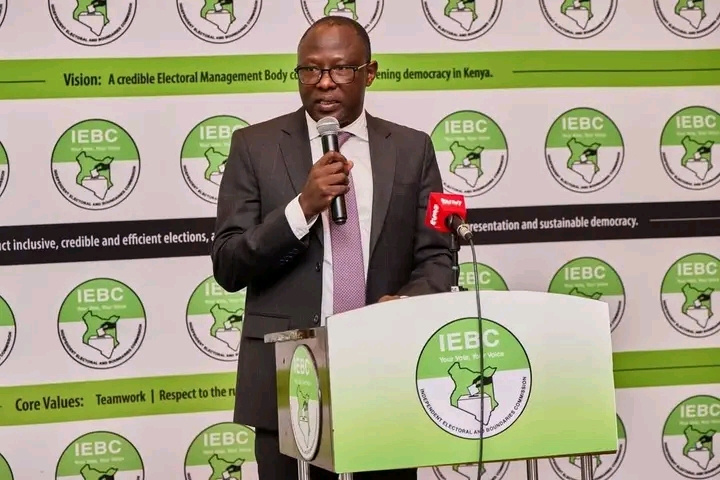
NAIROBI, Kenya, The Independent Electoral and Boundaries Commission has cautioned that it could delay or scrap next week’s planned by-election in Ol Kalou Constituency, citing growing concerns over lawlessness and malpractice during the campaign period.
In a media briefing held in Nairobi on Thursday, IEBC officials announced they had launched a formal investigation into several reported breaches of electoral law in Nyandarua County. The commission said it is specifically examining claims of vote buying, unlawful late-night political activities, and cases of politically linked violence.
A senior IEBC official addressing the press said the situation in Ol Kalou has become serious enough to put the credibility of the upcoming poll at risk. Behind him, IEBC banners displayed the commission’s vision of building “a credible Electoral Management Body deepening democracy in Kenya.”
Book a Mid-Article Native AdDesktop: Fluid (728x90) · Mobile: Fluid (300x250)IEBC said it has received information alleging that money and other goods are being distributed to voters to influence how they cast their ballots. Under the Electoral Offences Act, offering incentives to voters is illegal and can result in both criminal prosecution and disqualification of candidates.
The commission reported that some campaign teams have been conducting rallies and mobilization drives late at night, outside the hours permitted by law. IEBC argued that such activities are harder to monitor and create room for intimidation and disorder.
Officials also confirmed they are reviewing reports of confrontations and threats tied to the by-election campaigns. The commission said any acts of violence aimed at disrupting the process will be treated with zero tolerance.
IEBC did not name individuals or parties during the briefing, but stressed that the investigation will cover all actors found to have broken the law.
Book a Mid-Article Native AdDesktop: Fluid (728x90) · Mobile: Fluid (300x250)Ol Kalou Constituency in Nyandarua County is set to hold a by-election next week to fill a vacant parliamentary seat. By-elections in Kenya often attract heightened political activity because they are viewed as a test of party strength between general elections.
The commission’s warning that it may postpone or cancel the vote is significant. Kenyan law gives IEBC the mandate to suspend an election if it believes the environment is not conducive to a free and peaceful process.
A postponement would require the commission to reorganize logistics including polling staff deployment, ballot printing, and security arrangements. A cancellation would mean starting the process over with a new timetable. Either option would come with financial and administrative implications.
During the briefing, the IEBC official said the commission’s core duty is to protect the integrity of elections and public confidence in the outcome.
“We cannot proceed with an election if there are clear signs that the results will be compromised by illegal activities,” he said in remarks carried in a live update. “If our findings show that violations are widespread, we will take the necessary action, including postponing or canceling.”
He added that IEBC is working closely with security agencies to ensure order and compliance with campaign regulations. The commission also promised to share further findings from the investigation in the coming days.
Allegations of bribery, night campaigns, and violence are not new in Kenyan by-elections. Civil society organizations have long called for stricter enforcement of electoral laws and for political leaders to control their supporters.
For voters in Ol Kalou, the uncertainty creates a difficult situation. Many have already been engaged in campaign activities, and parties have invested time and resources. A change in the election date could affect voter turnout and overall participation.
The commission’s firm tone suggests a shift toward stricter enforcement ahead of future polls. Analysts say that if IEBC follows through on its warning, it would demonstrate that the electoral body is willing to act decisively even in a single constituency to uphold standards.
Kenya’s elections are governed by the Constitution, the Elections Act, and the Electoral Offences Act. These laws prohibit bribery, voter intimidation, and disruption of the electoral process. They also regulate campaign times and conduct.
Penalties under the law include fines, imprisonment, and disqualification from contesting. By opening a probe, IEBC is signaling its intent to apply these provisions.
The commission also reminded political players of their responsibility to ensure peaceful campaigns. It urged candidates and parties to adhere to codes of conduct and to report any malpractice through official channels.
IEBC said it will conclude its investigation and make a decision before the scheduled voting date. For now, the by-election remains on the calendar, but its fate depends on what the commission finds.
“If we see a return to lawful campaigning and a calm environment, the election can proceed as planned,” the official said. “If not, we will act to protect democracy.”
The commission called on residents of Ol Kalou to remain peaceful and to avoid participating in or enabling any illegal acts. It also asked observers, the media, and civil society to help monitor the process and report violations.
The developments in Ol Kalou highlight the ongoing challenge of balancing competitive politics with law and order. Kenya has made progress in electoral management over the years, but by-elections continue to test the system.
A decision to postpone or cancel would be a strong statement from IEBC that integrity comes before timelines. It would also put pressure on political parties to self-regulate and ensure their candidates play by the rules.
At the same time, any disruption risks voter frustration. The commission will therefore have to weigh the need for a credible process against the desire to deliver the election as scheduled.
For now, all eyes are on IEBC as it completes its probe. The people of Ol Kalou, along with political stakeholders across the country, are waiting to see whether the by-election will go ahead next week or be pushed to a later date.
The commission closed its briefing by reaffirming its commitment to delivering “an inclusive, credible and efficient electoral process,” and said that principle will guide its final decision on Ol Kalou



Comments
No approved comments yet. Be the first to join the conversation.