
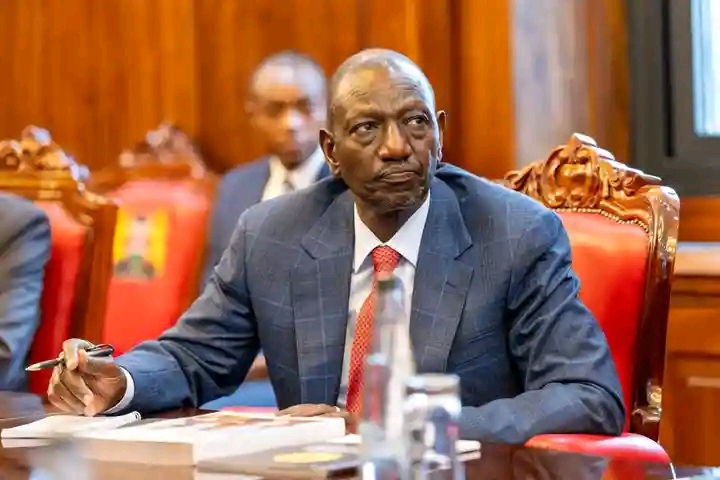
President William Samoei Ruto has announced that the government has received an update on plans for a major new cultural and scientific complex in northern Kenya. The proposed Kenya Home of Human Origins Museum and Science Park will be set up in the Lake Turkana Basin, an area already recognized worldwide for its deep links to human evolution.
According to the brief presented to the Head of State, the project is designed to do more than just house artifacts. Its core mandate is to position the Lake Turkana region as an international center for three key areas: scientific research, heritage conservation, and sustainable eco-tourism.
Lake Turkana and its surrounding basin have long been referred to by paleontologists as one of the most important sites for understanding early human history. Fossils discovered in the area, including the famous "Turkana Boy," have provided critical evidence about human ancestry. The new museum and science park seeks to build on that legacy by creating modern facilities that can attract researchers, students, and visitors from around the globe.
Book a Mid-Article Native AdDesktop: Fluid (728x90) · Mobile: Fluid (300x250)By combining a museum with a science park, the government envisions a space where archaeological work, public education, and tourism can happen side by side. The goal is to turn scientific discovery into an experience that is accessible to both Kenyans and international guests, while also protecting the region’s fragile ecosystems and cultural landscapes.
The complex is earmarked for Kalokol, a strategic area located between Turkana County and Marsabit County. Planners chose the site because of its central position within the basin and its proximity to several key fossil sites.
One of the most significant components of the project involves the return of Kenyan heritage materials that are currently held in institutions abroad. The statement indicated that the museum will play a central role in the repatriation of approximately 32,000 Kenyan artifacts and specimens that are scattered in collections across the world. Bringing these items home has been a long-standing request from cultural institutions and communities, and the new facility is intended to serve as their permanent and secure home.
Repatriation is expected to not only restore important pieces of national history but also to strengthen Kenya’s role in global conversations about the ownership and care of cultural heritage.
Book a Mid-Article Native AdDesktop: Fluid (728x90) · Mobile: Fluid (300x250)Beyond research and tourism, the project is framed as a development engine for the people living around Lake Turkana. The progress brief outlined several community-focused investments that will be rolled out alongside the museum.
First is access to water. Plans include provisions for both domestic use and livestock, a critical need in the arid region. Improved water infrastructure is expected to ease pressure on pastoralist communities and support livelihoods.
Second is security. The development is projected to contribute to stability in the area through better infrastructure and presence of institutions.
Third is connectivity and infrastructure. The project includes commitments to expand digital networks, improve roads and other physical infrastructure, and upgrade local facilities. These improvements are intended to link the remote region more closely to the rest of the country.
In addition, the government plans to invest in health and education. New and upgraded health centers and schools are part of the blueprint, aimed at raising living standards in Turkana and Marsabit. Existing museums in the region will also be renovated to align with the standards of the new science park, creating a network of cultural sites rather than a single standalone building.
Officials say these interventions are meant to ensure that residents see tangible benefits from having a globally significant project in their backyard, rather than watching opportunities pass them by.
The Lake Turkana Basin holds a unique place in the story of humanity. For decades, it has yielded fossil remains and stone tools that have reshaped scientific understanding of how early humans lived, migrated, and evolved. Because of this, the region is often called the "Cradle of Humankind" in East Africa.
Establishing a dedicated museum and science park here serves two purposes. Scientifically, it provides a base for ongoing excavations, labs, and collaboration with universities and research institutes. Culturally, it gives Kenyans a place to connect with that deep history in a tangible way.
The eco-tourism element is also key. By promoting responsible travel to the area, the project could generate jobs in hospitality, guiding, crafts, and conservation. The idea is to build a model where tourism revenue supports both heritage protection and community development.
The presidential taskforce and National Museums of Kenya are now expected to move the project from planning to implementation. While timelines were not detailed in the President’s update, the mention of a progress brief suggests that feasibility studies, site planning, and stakeholder consultations are already underway.
If completed as envisioned, the Kenya Home of Human Origins Museum and Science Park would be one of the largest investments in culture and science in the country’s history. It would place Kenya at the center of paleoanthropological research while also addressing long-standing development gaps in northern Kenya.
For many in Turkana and Marsabit, the promise is not just about fossils and tourists. It is about water, schools, clinics, roads, and internet access — the basics that make daily life easier. The government’s framing of the project suggests an attempt to link national pride in heritage with practical improvements on the ground.
As the repatriation of 32,000 artifacts begins and construction plans take shape, all eyes will be on Kalokol. The area is set to transform from a remote lakeside town into a destination where the story of human origins is studied, preserved, and shared with the world.
The Lake Turkana Basin has already given science some of its most important answers about where we come from. With this new museum and science park, Kenya aims to make sure those answers are told from home.
Comments
No approved comments yet. Be the first to join the conversation.