
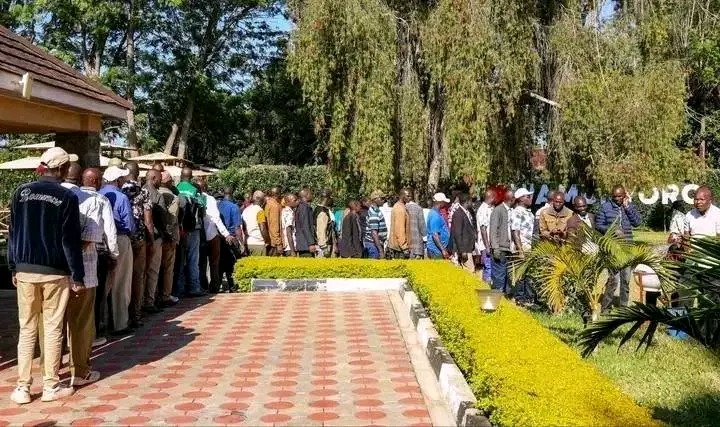
A long line of 14-seater public service vehicles made its way into former Deputy President Rigathi Gachagua’s Wamunyoro residence on Wednesday, marking another major stop in his ongoing political outreach ahead of the 2027 General Election.
The convoy, which was composed entirely of matatus carrying members of the Kipsigis community, arrived at the DCP leader’s rural home in the afternoon for what organizers described as a community engagement and consultation.
The visit comes as Gachagua, who now leads the Democracy for the Citizens Party, continues a 45-day series of meetings at his home. The program is intended to bring together leaders, elders, professionals, and grassroots supporters from across the country to discuss political strategy, alliances, and development priorities ahead of the next national polls.
Book a Mid-Article Native AdDesktop: Fluid (728x90) · Mobile: Fluid (300x250)Wednesday’s delegation was notable for its size and composition. According to witnesses at the scene, the matatus arrived fully packed, with community members traveling from various parts of Rift Valley to meet the former DP in person.
The purpose of the engagement, sources close to the DCP said, was to allow members of the Kipsigis community to interact directly with Gachagua, share their concerns, and discuss how the community can work with his party going into 2027.
The Democracy for the Citizens Party has been positioning itself as a movement that prioritizes direct dialogue with citizens rather than relying solely on top-level political deals. Hosting community groups at Wamunyoro has become a central part of that approach.
For the Kipsigis, one of the largest sub-communities within the Kalenjin, the visit also signals an effort to build new political bridges. Rift Valley remains one of Kenya’s most decisive voting blocs, and securing goodwill there is viewed as critical for any serious presidential contender.
Book a Mid-Article Native AdDesktop: Fluid (728x90) · Mobile: Fluid (300x250)Gachagua launched the 45-day consultation period earlier this month, turning his Wamunyoro home into a de facto political hub. Since then, the residence has hosted a steady stream of visitors including clergy, youth groups, women leaders, business people, and representatives from different ethnic communities.
The former Deputy President has said the consultations are meant to “listen first” before making any major political decisions. In public remarks during earlier meetings, he emphasized the need to consolidate his support base while also reaching out to communities that have not traditionally aligned with him.
Political analysts note that the format mirrors classic Kenyan grassroots mobilization, but with a deliberate focus on inclusivity and optics. By welcoming delegations from across the country to his home, Gachagua is projecting an image of accessibility and national reach at a time when political realignments are accelerating.
Wednesday’s meeting with the Kipsigis delegation fits directly into that strategy. The goal, according to DCP insiders, is twofold: to strengthen existing support in regions where the party is already strong, and to create new partnerships in areas where the party hopes to expand.
The timing of the Kipsigis visit is significant. With the 2027 election still more than a year away, political formations are already laying groundwork for campaigns, alliances, and voter mobilization.
Rift Valley has historically played a kingmaker role in Kenyan presidential politics. Its large voter population and high turnout rates mean that no candidate can realistically compete for State House without strong support from the region.
The Kipsigis community, in particular, has been influential in shaping the political direction of the South Rift. Engaging them early allows Gachagua and the DCP to test messages, identify local leaders who can act as mobilizers, and address grievances before campaign season officially begins.
Those who traveled in the convoy are expected to use the meeting to present memoranda on issues affecting their areas, including agriculture, infrastructure, youth unemployment, and representation in government. Gachagua, in turn, is expected to outline the DCP’s policy positions and explain how the party plans to address those concerns if it gains power.
DCP officials have framed the 45-day consultations as both a listening tour and a coalition-building exercise. The party is seeking to position itself as an alternative to the current administration while also distinguishing itself from other opposition formations.
“These engagements are not about politics as usual,” a senior DCP organizer said. “They are about bringing people together around real issues and building a movement that reflects the diversity of Kenya.”
The arrival of the Kipsigis matatu convoy underscores that message. By hosting a community that is geographically and politically distinct from Gachagua’s traditional Mt. Kenya base, the DCP is signaling its intent to broaden its appeal beyond regional lines.
This outreach also comes amid ongoing debates within the opposition about unity, leadership, and strategy. Several political groups are competing to present themselves as the main alternative in 2027, and early community endorsements could play a decisive role in shaping those contests.
The Wamunyoro consultations are scheduled to continue for several more weeks. DCP officials say additional delegations from other communities are expected to arrive in the coming days.
For the Kipsigis visitors, Wednesday’s meeting marks the beginning of a longer conversation rather than a one-off event. Party officials indicated that follow-up structures will be put in place to ensure that issues raised during the engagement are tracked and addressed.
Whether these grassroots meetings will translate into votes in 2027 remains to be seen. But for now, the images of matatus lining the road to Wamunyoro tell a clear story: Kenyan politics is already in campaign mode, and community-level engagement is at the center of it.
As one local observer put it, “People want to be heard before they are asked to vote. That’s what is happening here.”
With the 2027 polls approaching, Gachagua and the Democracy for the Citizens Party appear to be betting that a strategy built on direct consultation and new alliances will give them the momentum they need. The Kipsigis convoy that arrived on July 15 may be remembered as one of the early signs of how that plan is unfolding.


Comments
No approved comments yet. Be the first to join the conversation.