
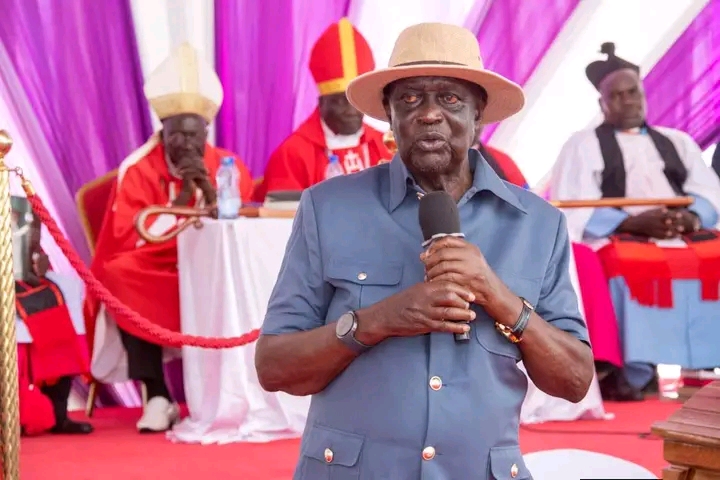
ODM National Chairman Dr. Oburu Oginga has announced that the Orange Democratic Movement will not present a presidential candidate in the 2027 General Election, and will instead rally behind President William Ruto for a second term.
Speaking on 12th July 2026, Oburu said the party’s leadership had made a deliberate decision to enter into a structured political arrangement with the Kenya Kwanza administration. According to him, the move is aimed at securing concrete benefits for ODM and its supporters rather than contesting for the presidency and risking another bruising national campaign.
"We have resolved that ODM will not field a presidential candidate in 2027. Instead, we will support President William Ruto for a second term," Oburu stated. "As we do this, we must go about it in an organized way. We need to negotiate and clearly understand what ODM stands to gain from this partnership."
Book a Mid-Article Native AdDesktop: Fluid (728x90) · Mobile: Fluid (300x250)The declaration marks one of the most significant political shifts for ODM in recent years and signals a new direction for the party that has been Kenya’s main opposition outfit for nearly two decades.
For years, ODM has positioned itself as the primary challenger to the ruling government, with party leader Raila Odinga contesting the presidency five times. The party’s base has traditionally mobilized around the idea of clinching the top seat.
Oburu’s announcement therefore represents a major recalibration. He framed it not as surrender, but as a pragmatic political calculation.
By choosing not to field a candidate, ODM avoids the costly and divisive process of a presidential nomination while positioning itself to bargain for influence within government. Oburu emphasized that any cooperation must be on clear terms.
Book a Mid-Article Native AdDesktop: Fluid (728x90) · Mobile: Fluid (300x250)"We are not just walking into this blindly," he said. "We must sit down, negotiate, and ensure that the interests of ODM members and the people who have stood with us over the years are protected and advanced."
The chairman did not outline specific positions or agreements that ODM is seeking, but the language of "negotiation" suggests the party will be pushing for cabinet slots, parliamentary leadership roles, development projects in its strongholds, and policy concessions.
The decision to support President Ruto comes amid an evolving political landscape. Since the 2022 elections, ODM and Kenya Kwanza have engaged in periods of both confrontation and cooperation. A bipartisan parliamentary process, committee appointments, and joint legislative work have created working relationships between leaders from both sides.
Oburu suggested that supporting Ruto’s re-election bid is the logical next step in that relationship. He argued that it makes more political sense for ODM to consolidate gains made through cooperation rather than return to a combative stance ahead of 2027.
President Ruto, who is expected to seek a second term, stands to benefit significantly from ODM’s endorsement. The party commands a large and loyal support base, particularly in Nyanza, Western, Coastal, and parts of Nairobi and Rift Valley. An ODM backing could help Ruto broaden his support beyond his traditional bases.
Political observers note that the move also reflects Raila Odinga’s reduced visibility in domestic party affairs due to his continental assignment as the African Union High Representative for Infrastructure. With Raila focused on AU duties, party management has increasingly fallen to Oburu and other senior officials.
The announcement is likely to spark debate within ODM ranks. Many party members and supporters have spent years campaigning against Ruto and Kenya Kwanza. The idea of supporting the same administration they opposed in 2022 will not sit well with everyone.
However, Oburu’s message appeared aimed at preparing the base for the shift. By stressing "structure" and "negotiation," he sought to frame the decision as a strategic alliance rather than a capitulation.
Party insiders say the National Executive Council has been discussing various options for 2027 for months. The options ranged from fielding another candidate, to supporting an alternative opposition figure, to entering a coalition with the sitting president. The decision to back Ruto suggests the cooperation faction within the party carried the day.
What remains unclear is how this will affect ODM’s candidates for governor, senator, MP, and MCA seats. Will ODM run its own candidates down the ballot while supporting Ruto at the presidential level? Or will there be a broader coalition arrangement? Oburu indicated those details would be worked out in the negotiations he referenced.
Oburu was careful to link the support for Ruto to tangible outcomes. In Kenyan politics, such arrangements are often about power-sharing and resource allocation.
By stating that ODM must "fully understand what it stands to gain," Oburu signaled that the party will not offer a blank-check endorsement. There will be expectations and deliverables attached.
With the 2027 election still more than a year away, political realignments are already taking shape. Ruto’s Kenya Kwanza administration will be seeking to expand its base, while opposition parties will be deciding whether to unite or go separate ways.
ODM’s decision to step aside at the presidential level removes one major variable. It means the opposition will need to look elsewhere for a flagbearer, or that Kenya could be headed toward a contest with an incumbent president enjoying support from a major opposition party.
For Ruto, an ODM endorsement would be a major political win. It would neutralize one of his fiercest critics and bring a significant voter bloc into his camp. For ODM, it is a gamble that cooperation will yield more for its supporters than another opposition campaign.
The announcement, shared widely on social media by outlets like Bensuh Updates, quickly drew discussion. The post, which included a photo of Oburu speaking at a podium wearing a hat and patterned shirt, had garnered over 100 reactions and dozens of comments within hours.
Some commenters expressed surprise at the turn of events, while others debated whether ODM supporters would follow the party’s new direction. The timing of the announcement — mid-2026 — suggests ODM wants to give its members time to process the decision before the official campaign period begins.
Oburu’s statement sets the stage for months of negotiations between ODM and Kenya Kwanza. The key question now is what the terms of the arrangement will look like and whether the ODM grassroots will accept it.
For now, the chairman’s message is clear: ODM is not contesting for the presidency in 2027. Instead, it is choosing to work with President Ruto, but only if the partnership is structured, negotiated, and beneficial to the party and its people.
"As we do so, we must proceed in a structured manner," Oburu reiterated. "We must negotiate and fully understand what ODM stands to gain."
Whether that translates into a formal coalition agreement, cabinet positions, or policy concessions will determine how this new political alliance holds up. One thing is certain the 2027 race has just taken a dramatic new turn, and ODM’s decision will reshape Kenya’s political calculations in the months ahead.
Comments
No approved comments yet. Be the first to join the conversation.