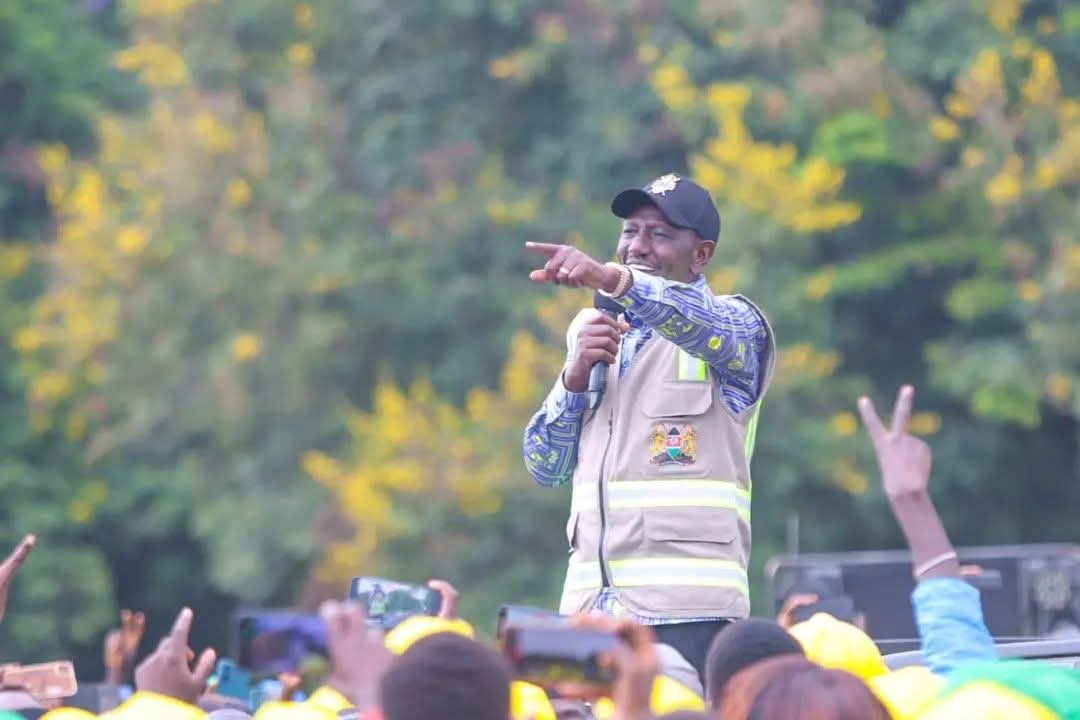
A call to turn identification into political participation dominated public remarks on July 15, 2026, after the Head of State highlighted a major gap in voter registration in the western part of the country.
Speaking during an address shared widely on social media, President William Ruto said that while many citizens in the western region hold national identification documents, a significant number have not completed the next step of registering as voters. According to the President, about 1.5 million people in the area have IDs but do not have voter cards.
“You must register to vote,” the President said. “About 1.5 million people in the western region have IDs but do not have voter cards. How will playing Isikuti drums help us if you do not even have a vote?”
Book a Mid-Article Native AdDesktop: Fluid (728x90) · Mobile: Fluid (300x250)The remarks, posted by news outlet Kenyans and accompanied by a photo of the President at a desk, quickly drew attention online. The post recorded more than 1,000 likes, nearly 200 comments, and multiple shares within hours, reflecting strong public interest in voter mobilization ahead of upcoming electoral cycles.
Identification documents are a basic requirement for civic life, used for services ranging from banking to education to government programs. A voter card, however, is the specific credential that allows a citizen to participate in elections.
The President’s point was direct: holding an ID shows legal recognition, but without voter registration that recognition does not translate into electoral voice. With 1.5 million people cited as being in that gap in just one region, the numbers suggest a large pool of potential voters who are currently absent from the register.
Political analysts note that regions with high ID ownership but low voter registration often experience lower turnout, which can affect representation in parliament, county assemblies, and in national leadership contests. When large groups are not on the voter roll, their policy priorities may receive less attention during campaigns, and their influence in determining elected leaders is reduced.
Book a Mid-Article Native AdDesktop: Fluid (728x90) · Mobile: Fluid (300x250)The reference to 1.5 million is also significant because in close races, margins of victory can be far smaller. Mobilizing even a fraction of that number could shift outcomes in parliamentary seats and in broader national races.
The President’s mention of Isikuti drums drew particular reaction. Isikuti is a traditional drum dance strongly associated with communities in the western region. It is performed at celebrations, funerals, and political rallies, and is often seen as a symbol of cultural pride and community unity.
By asking “how will playing Isikuti drums help us if you do not even have a vote,” the President appeared to be contrasting cultural expression with political action. The intent seemed to be to urge citizens to pair cultural identity with civic responsibility.
The comment sparked debate online. Some users agreed, arguing that cultural pride should be matched with participation in decision-making. Others defended cultural practices, saying that music, dance, and community gatherings are themselves important forms of social cohesion and should not be dismissed.
A separate social media comment referencing the same theme said, in translation, that “the work of the people of the western region is to play Isikuti and to ask for handouts.” That framing added to the discussion about stereotypes, economic empowerment, and political agency.
Voter registration drives are critical in the months leading up to elections. Electoral management bodies typically open registration windows, conduct verification exercises, and run public awareness campaigns to ensure eligible citizens are on the roll.
The President’s address serves as a high-profile push within that process. By citing a specific number and a specific region, the message personalizes the issue and puts pressure on both citizens and local leaders to act.
There are practical reasons for the gap the President described. Some ID holders may have moved and not updated their registration details. Others may assume that having an ID automatically places them on the voter register, which is not the case. Young people who recently turned 18 and obtained IDs may also not know they need to register separately. In rural areas, distance to registration centers and lack of information can also be barriers.
Civic groups have long argued that registration is the first and most important step in democracy. Without it, even the most engaged citizens cannot choose leaders, approve constitutional changes, or hold representatives accountable at the ballot box.
The July 15 remarks fit into a larger pattern of leaders urging citizens to take part in formal political processes. In past years, similar appeals have been made ahead of general elections and by-elections, often targeting youth, women, and first-time voters.
The focus on the western region is notable because it is one of the most populous areas and has historically been a key battleground in national elections. High voter turnout there can influence the overall national result. At the same time, low registration means potential influence is left untapped.
The President’s framing also touches on economic and development concerns. The implication is that having a vote gives communities leverage to demand services, infrastructure, jobs, and accountability from elected officials. Without a vote, that leverage is weakened.
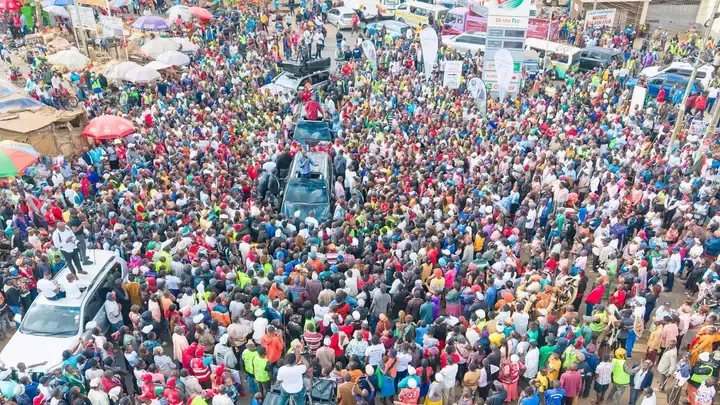
This is why the question about Isikuti drums resonated. Cultural events bring people together and can be used to mobilize communities. The President’s argument appeared to be: use those same gatherings to also register people, to turn community energy into political power.
Online, the reaction was mixed but engaged. With 195 comments, the post became a space for discussion about identity, politics, and responsibility. Some commenters shared information about where to register and what documents are needed. Others debated whether leaders were doing enough to make registration accessible.
For electoral authorities, the President’s statement adds urgency to outreach efforts. It highlights the need to ensure registration centers are open, information is clear, and the process is simple. For local leaders, it is a call to organize community drives, including at cultural events where large crowds gather.
For citizens, the message is straightforward: an ID is not the finish line. To influence who makes decisions about schools, roads, health facilities, and budgets, registration as a voter is required.
The President concluded with a clear directive. The path to influence, he suggested, runs through the ballot, not just through song and dance. Cultural pride and political participation, he implied, are not opposites. They can and should go together.
As the next election cycle approaches, the issue of voter registration will remain central. The figure of 1.5 million ID holders without voter cards serves as both a challenge and an opportunity.
If those citizens register, they could reshape representation in the western region and nationally. If they do not, their policy concerns may be underrepresented.
Civic education, mobile registration drives, and partnerships with community organizations will be key to closing the gap. So will continued messaging from national leaders that ties everyday concerns to the act of voting.
The President’s words on July 15 put that conversation front and center. By linking a cultural symbol to a civic duty, the address aimed to do more than share a statistic. It aimed to move people from identification to participation.
In a democracy, the right to vote only matters if it is used. For 1.5 million people in the western region, the next step is clear: turn that ID into a voter card, and turn presence into power.
Comments
No approved comments yet. Be the first to join the conversation.