
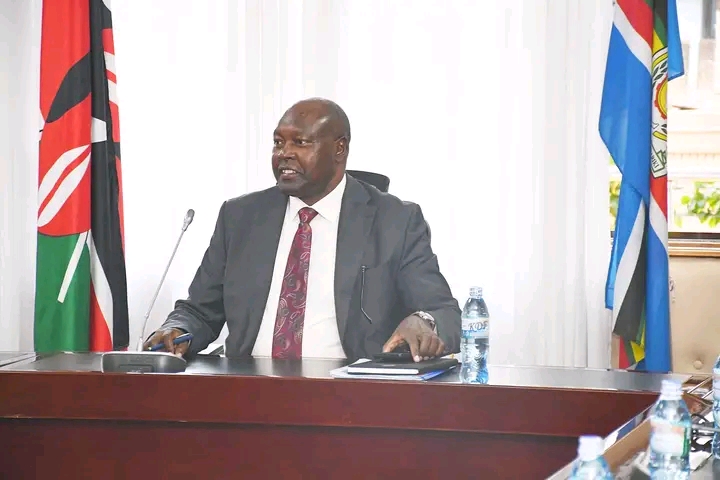
The Public Service Commission and the Social Health Authority have committed to a coordinated plan to absorb former National Health Insurance Fund employees into other government roles, as the country completes its transition to the new health insurance framework.
In a consultative meeting held at the Commission’s headquarters in Nairobi on Monday, July 7, 2026, PSC Chairperson Francis Meja hosted the top leadership of SHA, led by Board Chair Dr. Abdi Mohamed. The talks centered on how to handle staff who did not secure positions in SHA following the winding down of NHIF operations.
Both institutions said the goal is to ensure no qualified public servant is left behind as the health sector undergoes restructuring.
Book a Mid-Article Native AdDesktop: Fluid (728x90) · Mobile: Fluid (300x250)Finalizing SHA Staffing, Releasing the Rest to Government Service
According to briefings given during the meeting, SHA is in the last stages of filling roles that were approved under its new organizational structure. With that process nearing completion, the Authority has begun releasing staff who applied but were not successful in the SHA recruitment.
Those affected will now be handled by the Public Service Commission for placement in other parts of government.
“SHA updated the Commission on the status of its establishment and confirmed that recruitment is being finalized,” a statement from the meeting noted. “Consequently, all former NHIF personnel who did not make it through the SHA hiring process have been handed over to PSC for deployment to Ministries, Departments and Agencies.”
Book a Mid-Article Native AdDesktop: Fluid (728x90) · Mobile: Fluid (300x250)The Numbers: 1,158 Officers in Transition
Officials disclosed that the redeployment exercise is happening in phases. So far, 1,158 former NHIF officers have been released for reassignment across the public service.
The bulk of that number came in the latest batch. SHA said 885 officers were released in the current phase alone. The Commission confirmed it has already started the process of matching these officers to vacancies in various MDAs.
The MDAs include ministries, government departments, and agencies at both national and county levels where skills in administration, finance, customer service, and health systems management are needed.
PSC Chairperson Francis Meja said the Commission is treating the matter as a priority.
“We have assured the affected officers that their transition into mainstream public service will be smooth and orderly,” Meja said after the meeting. “The Commission is working to place them in roles where their experience can continue to benefit citizens.”
Dr. Abdi Mohamed, who chairs SHA, added that the Authority remains committed to working closely with PSC to ensure the process is fair and transparent.
“Our focus has been to build a lean and fit-for-purpose workforce for SHA. For colleagues who were not absorbed, we are grateful for their service and we support this redeployment pathway,” Dr. Mohamed said.
The redeployment comes amid major reforms in Kenya’s health financing system. NHIF, which operated for decades as the main public health insurer, is being phased out and replaced by SHA under the Social Health Insurance Act.
As part of the transition, SHA was mandated to recruit its own staff based on a new establishment. Existing NHIF employees were invited to apply, but not all could be absorbed due to the new structure, revised job descriptions, and competitive recruitment.
That left a significant number of career civil servants in limbo. Unions and staff associations had earlier raised concerns about job security, pensions, and continuity of service during the transition.
Monday’s agreement between PSC and SHA is intended to address those concerns by giving the affected officers a clear pathway back into government.
How the Redeployment Will Work
The Public Service Commission is the central body responsible for human resource management in the public service. Its role now is to audit the skills, qualifications, and experience of the 1,158 officers and match them to existing vacancies.
Officials say placement will consider the officers’ previous roles at NHIF, their professional training, and the needs of receiving MDAs. Priority areas include service delivery departments that interact directly with the public, as well as administrative and technical units.
The Commission has not given a specific timeline for when all 1,158 officers will receive new posting letters. However, sources indicate that the 885 officers released in this phase will be processed first, with deployment letters expected in the coming weeks.
PSC noted that the process will follow all public service regulations, including merit, regional balance, and affirmative action guidelines.
Why It Matters for Public Service
Labor experts say absorbing over a thousand experienced officers at once is both a challenge and an opportunity for government.
On one hand, it helps retain institutional knowledge. Many of the former NHIF staff have years of experience in insurance administration, claims processing, member management, and healthcare financing. Those skills are transferable to other MDAs dealing with social protection, health, and finance.
On the other hand, the exercise will require careful planning to avoid duplication of roles and to ensure new placements are meaningful.
“The government has an obligation to take care of its workers during transitions,” said a public administration analyst who was not part of the meeting. “Redeploying instead of retrenching protects livelihoods and keeps talent within the system.”
For the officers themselves, the assurance brings relief after months of uncertainty. Many had served NHIF for more than a decade and were worried about what would happen after the fund was dissolved.
The staff transition is just one part of the larger health reforms. SHA is expected to roll out expanded benefits under the new Social Health Insurance scheme, with a focus on universal coverage.
Government officials have repeatedly said the reforms are meant to make health financing more sustainable and to close gaps that existed under NHIF. That includes better targeting of vulnerable populations and improved efficiency in fund management.
As SHA builds its team, PSC will continue to play a coordinating role to ensure former NHIF staff are not disadvantaged.
Both PSC and SHA said they will maintain regular consultations until the redeployment is complete. The Commission will also provide updates to the affected officers through official channels.
For now, the 885 officers in the current phase are awaiting communication on their new work stations. The remaining officers from earlier phases are reportedly at various stages of placement.
Meja reiterated that the Commission’s door remains open for any officer who needs clarification.
“We understand this is a major change in people’s careers. Our teams are working to make the process as seamless as possible,” he said.
The meeting ended with both institutions agreeing to share data regularly and to fast-track any administrative bottlenecks that could delay postings.
As Kenya moves further away from NHIF and into the SHA era, the fate of more than a thousand former employees now rests on how quickly government can integrate them into new roles. For many families in Kapenguria, Nairobi, and across the country, those new postings will determine stability in the months ahead.


Comments
No approved comments yet. Be the first to join the conversation.