
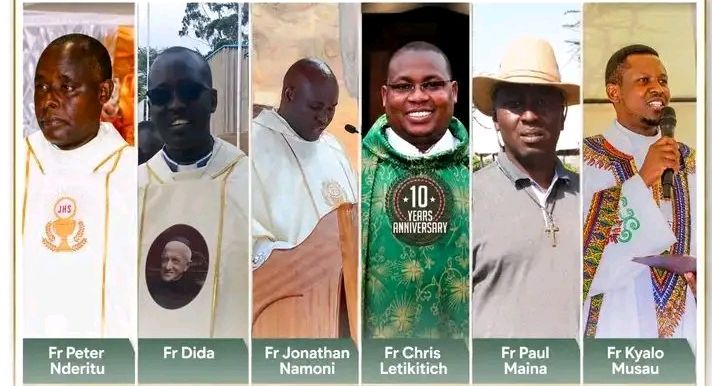
A wave of uncertainty has swept through the Catholic community in Northern Kenya after Bishop Joya Emusugut of the Mararal Catholic Diocese announced the immediate suspension of seven priests from all pastoral duties. The move, described by many faithful as unexpected, follows grave accusations of misconduct that have now placed both the Church and law enforcement agencies on high alert.
The suspension was made public in an official communication from the Bishop’s office. It affects Fathers Letikirich, Dida, Maina, Nderitu, Namoni, Stephen Lekasuiyan, and Musau. According to the statement, the clergy were barred from exercising any form of ministry after being linked to serious claims that include financial impropriety, favoritism in Church appointments, and breaches of Canon Law, the internal legal code that governs the Catholic Church.
For many parishioners in the vast Maral Diocese, which covers parts of Samburu and surrounding counties, the announcement came as a shock. Priests hold central roles in day-to-day parish life, from administering sacraments to overseeing Church-run schools, hospitals, and community programs. Their sudden removal has left congregations asking hard questions about leadership, accountability, and what comes next.
Book a Mid-Article Native AdDesktop: Fluid (728x90) · Mobile: Fluid (300x250)Bishop Emusugut did not go into full detail about the specific incidents behind the suspension, but the charges outlined were broad and severe. Corruption allegations point to possible mismanagement of Church funds and resources. Nepotism claims suggest that appointments and opportunities within parishes may have been influenced by personal relationships rather than merit. The additional charge of violating Canon Law indicates that Church procedures and doctrine may have been ignored in the course of ministry.
In Catholic practice, a bishop has the authority to suspend a priest temporarily when there is credible reason to believe that continued ministry could harm the faithful or the reputation of the Church. Such a suspension is not a final judgment. It is a precautionary measure meant to protect the community while investigations proceed.
In this case, the Bishop’s directive was clear: all seven priests are to refrain from celebrating Mass publicly, hearing confessions, preaching, and performing any other sacramental or administrative duties until further notice.
What makes this case particularly complex is that the suspended priests now face scrutiny on two separate fronts.
Book a Mid-Article Native AdDesktop: Fluid (728x90) · Mobile: Fluid (300x250)First, there is the internal Church process. The Diocese has initiated a formal canonical disciplinary procedure. This is a structured investigation carried out under Canon Law, overseen by Church tribunals and senior clergy. The purpose is to determine whether the priests violated Church doctrine, moral standards, or administrative rules. Depending on the findings, outcomes can range from a temporary reprimand and mandatory retraining to more severe penalties such as laicization, which would mean removal from the priesthood permanently.
Canonical trials are known for being thorough and deliberate. They involve gathering testimony, reviewing documents, and giving the accused an opportunity to present a defense. Because the Church views the priesthood as a sacred vocation, these processes aim to balance justice with mercy, while also upholding the integrity of the institution.
Second, and running alongside the Church process, is a criminal investigation by the Directorate of Criminal Investigations, DCI. Sources indicate that the DCI stepped in after reports of death threats allegedly directed at Bishop Emusugut. While the connection between the threats and the suspension has not been fully clarified, the involvement of a state security agency raises the stakes significantly.
If the DCI finds evidence of criminal activity such as fraud, abuse of office, or intimidation, the matter could proceed to prosecution in civil courts. This would be separate from any decision made by the Church, meaning the priests could face both ecclesiastical and legal consequences.
Until both processes reach a conclusion, the seven clergy will remain out of active ministry. The Diocese has emphasized that this is to ensure transparency and to avoid any interference with the ongoing investigations.
The suspension has created immediate practical challenges. With seven priests sidelined, several parishes and outstations are now without their resident clergy. Sacraments such as weddings, baptisms, and regular Sunday Masses will need to be covered by other priests, some of whom may have to travel long distances across the diocese’s rural terrain.
The Diocese has moved quickly to appoint interim parish leadership. The goal, according to insiders, is to maintain stability and ensure that pastoral services continue without major disruption. Veteran priests from neighboring parishes and senior diocesan officials are expected to take on additional responsibilities in the coming weeks.
For the faithful, the situation has sparked a mix of reactions. Some have expressed sadness and confusion, saying they did not expect to see leaders they have known for years face such serious allegations. Others have welcomed the Bishop’s firm action, arguing that accountability is necessary if the Church is to maintain public trust. In many rural communities, priests are not only spiritual leaders but also key figures in education, health, and social welfare. Any disruption to their work is felt deeply.
This case in Maralal comes at a time when the Catholic Church in Kenya and globally is under increasing pressure to address issues of governance, transparency, and clerical conduct. Over the past decade, Church leadership has repeatedly stressed the need for zero tolerance toward corruption and abuse, and for processes that are both just and timely.
Canon Law provides bishops with significant authority to act, but it also requires due process. That means the suspended priests are presumed innocent until proven guilty within the canonical system. At the same time, the parallel DCI investigation means that civil law will also have its say.
Church observers note that how the Diocese handles this case will likely be watched closely by other dioceses. A fair, transparent process could reinforce confidence among lay Catholics. Delays or perceived cover-ups, on the other hand, could deepen mistrust.
For now, the situation remains in a holding pattern. The canonical process will likely take months, as evidence is collected and reviewed by Church authorities, possibly with input from the Vatican’s doctrinal offices for complex cases. The DCI investigation will follow its own timeline, dependent on forensic work, witness statements, and legal procedures.
Bishop Emusugut has not made further public comments since the initial announcement, but the Diocese is expected to issue updates as the investigations progress. In the meantime, the focus for diocesan leadership is on pastoral continuity. Ensuring that Masses are said, schools are supported, and vulnerable communities are served will be critical to maintaining morale.
The seven priests involved have not issued public statements. Under both Church and civil procedure, they will have the right to respond to the allegations and present their side of the story.
On the ground in Maralal, parishioners are adapting. Some have organized prayer meetings for the Diocese, asking for guidance and unity. Others are seeking clarity from Church officials about how long the interim arrangements will last.
Community leaders have also weighed in, calling for calm and urging people not to speculate. “This is a matter for the Church and the law to resolve,” said one local elder. “Our role as faithful is to pray for truth and for healing.”
The Catholic Church remains one of the largest providers of social services in the region, running schools, health centers, and development projects. Any prolonged instability in leadership could affect those programs, which is why the Diocese’s swift appointment of new parish coordinators is seen as an important step.
The suspension of seven priests in the Maralal Catholic Diocese marks a significant moment for the Church in Northern Kenya. It brings to the forefront difficult questions about leadership, accountability, and the intersection of religious authority and civil law.
As the canonical disciplinary process and the DCI investigation move forward, the Diocese faces the challenge of maintaining spiritual care while upholding the principles of justice. For the faithful, it is a period of waiting, prayer, and hope that the truth will emerge and that the Church will emerge stronger.
The coming months will determine not only the fate of the seven priests, but also the direction of the Maralal Diocese as it seeks to rebuild trust and continue its mission in one of Kenya’s most underserved regions.
Comments
No approved comments yet. Be the first to join the conversation.