
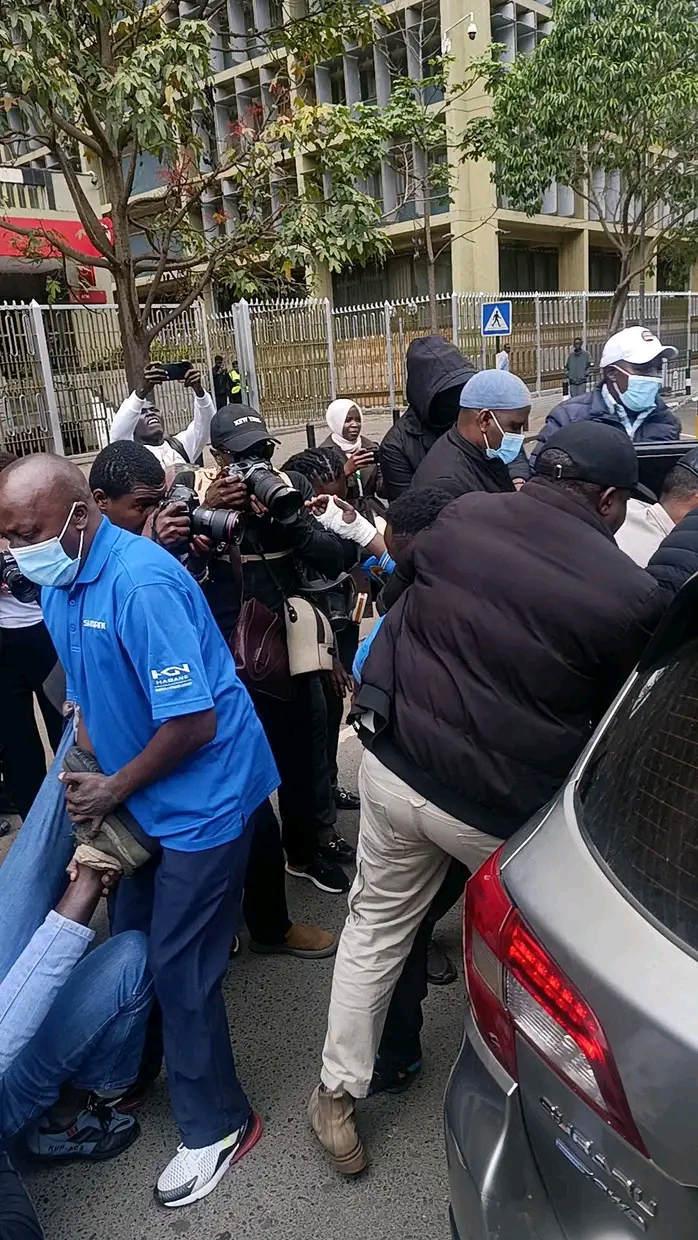
NAIROBI_Tuesday’s Saba Saba commemorations in Nairobi took a tense turn after plain clothes officers moved in to arrest several demonstrators in the city center, with images and video circulating online showing protesters being bundled into unmarked police vehicles.
The incident happened as small groups gathered to mark July 7, a date in Kenya’s history linked to the 1990 push for multi-party democracy. This year, the day was observed across different parts of the country with varying levels of turnout. In Nairobi, the mood shifted quickly from peaceful assembly to confrontation after security personnel intervened.
Photos shared on social media showed officers in civilian clothing pulling young men and women toward the back of a silver Subaru SUV with its boot open. One protester, wearing a green hoodie and carrying a backpack, appeared to be lifted into the vehicle as others around him shouted. Another individual in a blue work jacket was seen assisting officers. Witnesses nearby filmed the scene on their phones while some in the crowd cried out and appealed to the officers.
Book a Mid-Article Native AdDesktop: Fluid (728x90) · Mobile: Fluid (300x250)According to eyewitness accounts and video clips, the arrests took place along a busy street in the CBD during the late morning. A group of demonstrators had been marching and chanting, holding placards and Kenyan flags. Within minutes, several men in plain clothes, some wearing hoodies and caps, approached the group and began detaining individuals.
The use of unmarked vehicles drew immediate attention. Subarus with no police markings are commonly associated with police operations in Kenya, and their presence often sparks debate about transparency and due process during arrests.
Bystanders were heard questioning the officers on camera, asking for identification and the reason for the arrests. Some protesters tried to pull away, but were restrained and placed into the vehicle. By the time the car drove off, at least two people had been taken in.
There was no immediate statement from police at the scene explaining the grounds for the detentions.
Book a Mid-Article Native AdDesktop: Fluid (728x90) · Mobile: Fluid (300x250)July 7, or Saba Saba, commemorates the 1990 rally at Kamukunji grounds where Kenyans demanded the reintroduction of multi-party politics. Over 35 years later, the date has become both a historical marker and a day for civic expression.
In 2026, the commemorations reflected that split identity. In some towns, the day passed quietly with panel discussions and online conversations. In Nairobi and a few other urban centers, however, there were street gatherings and a stronger police presence.
The issues raised by demonstrators this year mirrored ongoing public concerns: the cost of living, youth unemployment, transparency in government spending, and the implementation of devolution. Many of the young people who turned out said they wanted leaders to remember that democratic rights include the right to assemble and to be heard.
But the scenes in Nairobi also highlighted the friction that can occur when protest meets policing.
The National Police Service has maintained that it facilitates peaceful protests while acting to prevent disorder, vandalism, or disruption of businesses. In previous years, authorities have warned against property destruction and blocking major roads during demonstrations.
The use of plainclothes officers and unmarked cars, however, continues to be a point of contention. Human rights groups have previously called for officers to identify themselves clearly during arrests and to follow constitutional procedures, including informing suspects of the reason for detention.
On Tuesday , legal observers online noted that the images raised questions about whether proper arrest procedures were followed. “People have a right to protest. Police also have a duty to maintain order. The test is whether both can happen within the law,” one lawyer posted in response to the video.
As of late afternoon, police had not released an official number of those arrested in Nairobi or the specific charges they might face.
The footage and photos spread quickly. The post that featured the arrests garnered more than 160 reactions and dozens of comments and shares within hours.
Some commenters condemned the arrests, calling them heavy-handed and saying they undermined the spirit of Saba Saba. Others defended the police action, arguing that officers must prevent protests from escalating. A number of users focused on the emotional reaction of those detained, with one writing that “hearing people cry out as they’re arrested is what makes many Kenyans uncomfortable.”
The debate also turned to the broader meaning of Saba Saba in 2025. “We fought for the right to speak,” one comment read. “Now the question is, are we listening to each other?”
The original Saba Saba rally was a turning point. On July 7, 1990, activists defied a ban to gather and demand political reform. The state’s response then drew international attention and is widely credited with pressuring the government to repeal Section 2A and allow multi-party democracy the following year.
Since then, the day has been marked in different ways. Sometimes it has drawn large crowds and clashes. Other times it has been observed with marches, memorials, or policy forums. The through-line has been civic engagement.
This year’s events come amid continued national conversations about governance, economic pressure, and the role of young people in politics. Many of those who participated on Monday were in their 20s and 30s, an age group that has become increasingly vocal about accountability and opportunity.
By midday, normality had largely returned to the areas where the arrests occurred. Traffic resumed, and businesses that had closed briefly reopened. There were no reports of major damage to property.
Civil society organizations said they were monitoring the situation and would seek to establish the whereabouts of those detained. They also urged both protesters and police to uphold the constitution, which guarantees the right to peaceful assembly while also allowing for reasonable regulation in the interest of public safety.
As one Nairobi resident who watched the arrests commented: “We remember 1990 because people were brave enough to stand. Today we’re still asking the same question. How do we stand, and how do we listen?”

Comments
No approved comments yet. Be the first to join the conversation.