
President William Ruto’s campaign toward the 2027 general election is suddenly running into turbulence, and the latest numbers from TIFA Research suggest the headwinds are getting stronger. According to the new poll, the president’s support has plateaued at 24 percent, a figure that would have been unthinkable for an incumbent just two years into his term but now reflects a country where economic frustration, shifting alliances and voter fatigue are colliding at once.
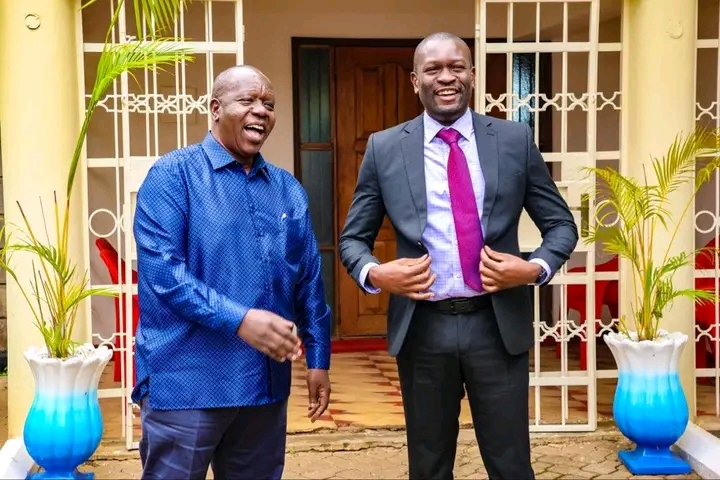
More striking than Ruto’s stagnation is what is happening on the other side of the aisle. A potential partnership between former Interior Cabinet Secretary Fred Matiang’i and Nairobi Senator Edwin Sifuna is registering 29 percent in a hypothetical matchup, enough to push the two ahead of the president in the early projections. The five-point gap is not just a statistical blip. It points to a recalibration inside the opposition, where personal brands are being weighed against the demand for a united front.
The most unexpected storyline in the TIFA findings is the divergence between the two men who could lead that front. Sifuna, the outspoken ODM senator who has built a reputation for sharp parliamentary exchanges and relentless grassroots mobilization in Nairobi, is described in the poll as experiencing a surge. His name recognition has climbed, and voters, especially in urban centers and among younger demographics, appear to view him as a fresh voice willing to confront power directly.
Book a Mid-Article Native AdDesktop: Fluid (728x90) · Mobile: Fluid (300x250)Matiang’i tells a different story. Once seen as the enforcer of the previous administration and a technocrat with a national profile, the former CS is now shown slipping in preference. His numbers have dipped compared to earlier surveys, suggesting that while he retains respect for his time in government, the association with past policies and a more reserved public style may be costing him momentum. Yet it is precisely this contrast that makes the idea of a joint ticket compelling to poll respondents. The data implies that voters are not looking for a single hero. They are looking for balance.
That balance is what the 29 percent figure seems to capture. When Matiang’i and Sifuna are presented together, the combination outperforms either man individually and edges past Ruto. Analysts reading the poll say the reason is simple: the pairing merges two different strengths. Matiang’i brings administrative experience, a track record in security and education, and appeal in parts of the country that value order and delivery. Sifuna brings energy, media savvy, and a direct line to the urban electorate that has grown increasingly vocal about cost of living and governance. Together, they neutralize each other’s weaknesses.
For Ruto, the message is uncomfortable. At 24 percent, he is not in free fall, but he is also not expanding. Incumbents usually use the middle of their term to consolidate, yet the TIFA numbers suggest he is stuck, unable to convert state projects and development announcements into a broader base of support. Part of that is policy. Kenyans continue to feel the pinch of high prices, taxation, and debt. Part of it is politics. The president’s allies have spent much of the last year managing internal Kenya Kwanza wrangles rather than selling a cohesive 2027 narrative.
The opposition, by contrast, appears to be learning the lesson that doomed it in 2022. Then, fragmentation was its Achilles heel. Multiple candidates split the anti-government vote and allowed Ruto to win with a plurality. Now the poll is signaling that voters have little patience for ego-driven campaigns. The phrase that keeps coming up in focus group excerpts cited alongside the survey is “unity, not ego.” Respondents say they would rather back a combined team, even if it requires compromise, than watch the opposition repeat the mistakes of the last cycle.
Book a Mid-Article Native AdDesktop: Fluid (728x90) · Mobile: Fluid (300x250)That sentiment explains why a Matiang’i-Sifuna alliance resonates. It is not an ideological merger so much as a practical one. Matiang’i is not known for fiery rhetoric, and Sifuna is not known for running large ministries. But side by side they offer a story the opposition has lacked: competence plus confrontation. One can speak to delivery, the other to accountability. One can calm establishment nerves, the other can mobilize the streets.
The reshaping of the opposition’s power play goes beyond personalities. The poll hints at a generational shift. Sifuna’s rise reflects a cohort of leaders in their 40s who came of age in devolution politics and are comfortable with social media, public debate, and coalition building across ethnic lines. Matiang’i’s slide does not mean he is finished, but it does mean he can no longer assume that a technocratic CV alone will carry him. Voters want visibility, and they want candidates who can articulate grievances in real time.
Ruto’s team will argue that polls 30 months before an election are snapshots, not prophecies. That is true. Twenty-four percent leaves room to grow, and incumbency comes with the machinery of government, resources, and time to deliver projects that can change perceptions. The president also still commands strong support in parts of the Rift Valley and among constituencies that benefited from his bottom-up economic messaging in 2022. But the danger is that stagnation hardens. If 24 percent becomes the ceiling rather than the floor, it will be very hard to climb without a major reset in both policy and communication.
For the opposition, the challenge is to turn a hypothetical 29 percent into an actual campaign. Alliances in Kenya are notoriously fragile. Ego, regional calculations, and party interests have broken up many promising arrangements before. The TIFA numbers, however, create an incentive to try. They provide evidence that unity is not just morally appealing, it is electorally advantageous. A combined ticket does not guarantee victory, but it does give the opposition something it has not had in a long time: a lead.
What makes this moment different is the tone of the electorate. The poll does not show voters demanding revolution. It shows them demanding coherence. They are tired of infighting, tired of promises that do not match lived experience, and tired of leaders who seem more interested in positioning than problem solving. When respondents chose a Matiang’i-Sifuna pairing, they were not necessarily endorsing both men equally. They were endorsing the idea that different skills can be put to work for a common purpose.
Sifuna’s meteoric rise will also force conversations inside ODM and the broader Azimio grouping. Can a relatively young senator from Nairobi carry national weight? Can he share space with a former CS who once ran the most powerful ministry in government? The early data says yes, at least in the abstract. But politics is about negotiation, and the next few months will test whether ambition can be subordinated to strategy.
Matiang’i’s declining numbers do not close the door for him. In fact, they may make him more open to partnership. A solo bid looks increasingly difficult, but as part of a team he remains valuable. His experience could reassure voters who worry about inexperience, while Sifuna’s profile could energize voters who worry about continuity with the past. That is the calculation the 29 percent appears to reflect.
As 2027 approaches, the contest is shaping up less as a referendum on one man and more as a test of whether Kenya’s opposition can institutionalize cooperation. The TIFA poll suggests the public is ready for that experiment. Ruto is stuck at 24 percent not because voters have abandoned him en masse, but because they have not yet been given a reason to move beyond him. The opposition, meanwhile, has been given a reason to move beyond itself.
If unity holds, the five-point advantage could grow. If it fractures, the advantage will evaporate, and Ruto will have an opening to recover ground. For now, though, the numbers tell a clear story. The president faces a storm he cannot ignore. And the opposition has found, at least on paper, its sharpest weapon: not a single personality, but a willingness to put the collective ahead of the individual.



Comments
No approved comments yet. Be the first to join the conversation.