
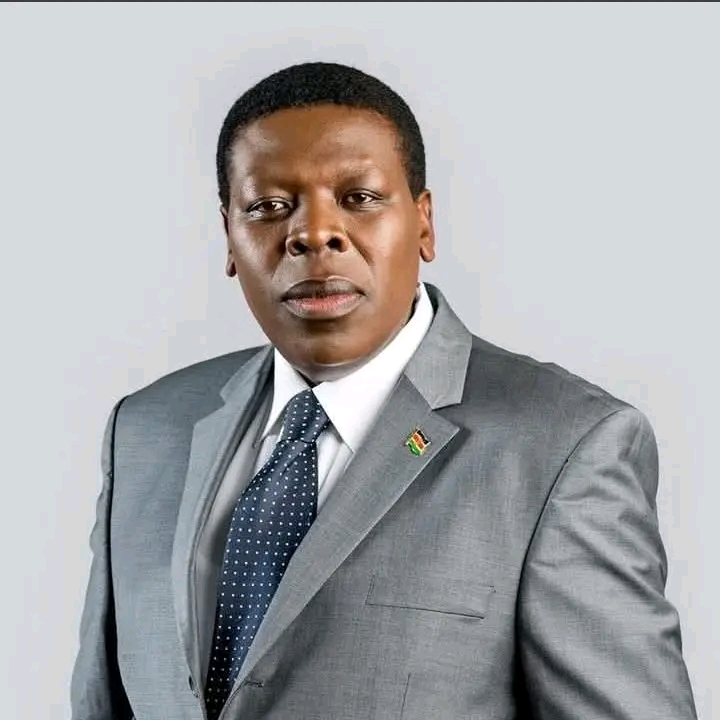
Former Cabinet Secretary and DAP-Kenya party leader Eugene Wamalwa has cautioned that the continued formation of new political parties in Western Kenya risks widening existing fault lines within the Luhya community.
Speaking during a public address on Sunday, Wamalwa directly addressed Trans Nzoia Governor George Natembeya and other regional leaders pushing for fresh political formations, urging them to reconsider a path he believes will weaken the region’s bargaining power on the national stage.
“Forming more political parties in Western Kenya will only create more division among the Luhya community,” Wamalwa stated. “At a time when we need unity to negotiate development and representation, splintering into smaller outfits will leave us weaker.”
Book a Mid-Article Native AdDesktop: Fluid (728x90) · Mobile: Fluid (300x250)Western Kenya, home to one of Kenya’s largest voting blocs, has historically struggled to speak with one political voice. The region has produced multiple parties over the last two decades, from Ford Kenya to ANC, and more recently DAP-Kenya and other county-based outfits.
Wamalwa argued that this trend has not translated into tangible gains for the people of the region. Instead, he said, it has created competition among leaders from the same community, diluted resources, and made it easier for national coalitions to pick off leaders individually rather than engage the region as a bloc.
“We have tried the route of many parties before. What has it given us? More confusion, more infighting, and less development,” he said. “The Luhya community deserves leadership that brings people together, not leadership that divides us further for personal ambition.”
His remarks come amid growing debate in Bungoma, Kakamega, Vihiga, Busia and Trans Nzoia counties over the need for a “Western Kenya party” that can independently negotiate with larger national coalitions ahead of the 2027 General Election. Governor Natembeya has been among the most vocal proponents of new political vehicles, arguing that existing parties have failed to deliver on promises to the region.
Book a Mid-Article Native AdDesktop: Fluid (728x90) · Mobile: Fluid (300x250)Wamalwa, however, warned that starting new parties now would only replicate past mistakes.
Kenya’s electoral system rewards numbers and coalition-building. Wamalwa emphasized that a fragmented Western Kenya will struggle to command influence in presidential politics, where running mates, cabinet positions, and development projects are often allocated based on the size and loyalty of a voting bloc.
“When we go to the national table divided into five or six different parties, we go as beggars,” he said. “When we go as one people with one agenda, we go as partners.”
He pointed to other regions that have maintained relative political cohesion and, in his view, reaped the benefits in terms of infrastructure projects, government appointments, and policy influence.
The former Defence CS also urged young leaders in the region to focus on issue-based politics rather than personality-driven party formation. According to him, the challenges facing Western Kenya — sugar sector collapse, unemployment, poor roads, and underfunded health facilities — require collective lobbying, not competition for party symbols.
Wamalwa’s comments have sparked mixed reactions across the region. Some political analysts agree that party proliferation has historically hurt Western Kenya’s influence. They argue that with over 20 parliamentary seats and several gubernatorial positions, the region should be a kingmaker, but internal divisions have often reduced it to a spectator.
Others, particularly supporters of newer political formations, argue that the existing parties have become stale and no longer represent the aspirations of young voters. They say fresh parties are necessary to break away from old political dynasties and offer new ideas.
A voter in Kakamega who attended the address said: “We are tired of being told to unite but then seeing the same leaders fight each other during elections. Maybe new parties are the answer, maybe not. But we need leaders who will deliver water, jobs, and hospitals first.”
The Luhya community is Kenya’s second-largest ethnic group and has played a pivotal role in past elections. Yet political observers note that the community has rarely voted as a single bloc. The 2007, 2013, 2017 and 2022 elections all saw Luhya leaders align with different national coalitions, often competing against each other in the same region.
Wamalwa’s own DAP-Kenya party was formed in 2021 as an alternative voice for the region, but he now appears to be cautioning against further fragmentation. His stance suggests a shift toward consolidating existing structures rather than adding more to an already crowded political field.
He reiterated that unity does not mean everyone must be in one party, but that leaders must agree on a common regional agenda before engaging national politics.
With just over a year to the next general election, political realignments in Western Kenya are expected to intensify. The debate over whether to form new parties or strengthen existing ones will likely dominate county meetings, funerals, and rallies in the coming months.
Wamalwa closed his remarks by calling on elders, professionals, clergy, and youth leaders to convene a regional forum to draft a “Western Kenya Development Charter.” He said such a document would outline priority projects and unite leaders across party lines.
“Let us not waste energy forming parties that will fight each other in 2027,” he said. “Let us form ideas. Let us form a plan. That is how we will get respect in Nairobi.”
As the political temperature rises, the question remains whether Wamalwa’s call for unity will resonate with a new generation of leaders who believe the old structures have failed them. For now, his message is clear: more parties may mean more noise, but not necessarily more power for the Luhya community.
The discussion around regional unity versus political entrepreneurship is set to shape not only Western Kenya’s internal dynamics, but also its role in determining the next national government. Whether leaders heed the call for consolidation or continue down the path of new formations will determine how much influence the region wields in 2027 and beyond.
Comments
No approved comments yet. Be the first to join the conversation.