

Yesterday’s passage of the Finance Bill 2026 was not just another parliamentary vote. It was a statement about where the government believes Kenya’s economy must go next, and who must carry the weight of getting it there.
On paper, the Bill is dressed in familiar Treasury language: broaden the tax base, improve compliance, strengthen revenue collection, and support the national budget. That language sounds neat in boardrooms.
But outside Parliament, it lands differently.
It lands on the payslip. It lands on the small business owner. It lands on the digital worker receiving payments online. It lands on landlords, traders, consumers, importers, investors, and young people trying to survive an economy that already feels like it is charging them rent for breathing.
Book this slot## A Quieter Bill, But Not a Lighter One
Compared to the political firestorm of the Finance Bill 2024, the 2026 version has been marketed as more careful.
The government appears to have learnt one lesson: do not walk into the public square carrying loud, visible tax hikes and expect silence. So this time, the language is more technical. The tax pressure is hidden in compliance systems, definitions, enforcement powers, digital transactions, and sector-specific measures.
That does not mean the impact is small.
Book this slotA tax does not need to shout to hurt. Sometimes it only needs to sit quietly inside a transaction fee, a digital payment, a rental income rule, or a compliance deadline.
## The Government’s Argument Is Not Empty
To be fair, Kenya has a real fiscal problem.
The country needs money to fund roads, schools, health, security, counties, salaries, debt obligations, and development programmes. Borrowing endlessly is not sustainable. Running government on hope and press statements is not a budget strategy.
Book this slotSo when Treasury says it wants to improve domestic revenue mobilisation, that argument deserves to be heard.
A modern state must collect taxes. A serious economy must widen the tax net. A country cannot demand services while pretending revenue will fall from the sky like April rain.
The problem is not collection itself.
The problem is whether collection is fair, transparent, efficient, and sensitive to the pain already sitting in Kenyan households.
Book this slot## The Digital Economy Is Now in KRA’s Full View
One of the clearest messages in the Finance Bill 2026 is that the digital economy is no longer a side street. It is now a main road for taxation.
Digital payments, platform-based financial services, virtual assets, card transaction fees, payment systems, and online business models are increasingly being pulled into the tax net.
From a finance analyst’s seat, this was always coming. Money has moved from counters to phones. Business has moved from physical offices to apps, websites, marketplaces, and payment gateways. KRA was never going to sit outside that room forever.
Book this slotBut here is the delicate part: Kenya’s digital economy is also one of its most important growth engines.
It is where young people freelance. It is where SMEs sell. It is where creators earn. It is where informal businesses become visible. It is where innovation breathes before regulation arrives with boots.
Taxing that space requires a surgeon’s hand, not a hammer.
## SMEs May Feel the Squeeze First
Book this slotLarge companies can hire tax consultants, lawyers, accountants, and compliance officers.
Small businesses cannot.
For an SME, every new filing rule, withholding obligation, VAT adjustment, platform charge, or documentation requirement is not just “administration.” It is time away from customers. It is money away from stock. It is stress added to already thin margins.
This is where policy makers often miss the human economy.
Book this slotA shop owner does not experience tax policy as a PDF. A boda spare parts dealer does not experience compliance as a Treasury paragraph. A young entrepreneur selling online does not experience digital tax rules as a technical amendment.
They experience it as cost, uncertainty, fear of penalties, and sometimes the quiet decision not to expand.
## Parliament Passed the Bill, But Trust Is Still Pending
The vote may be over, but the trust question remains wide open.
Book this slotKenyans are not only asking whether the government can collect more. They are asking whether the government can spend better.
That is the wound in this debate.
Citizens are told to sacrifice, but they still see wastage. They are told to comply, but they watch public money vanish into scandals. They are told taxes build the nation, but many cannot see the nation being built in their neighbourhoods.
This is why every Finance Bill now carries more than tax clauses. It carries public anger, memory, suspicion, and fatigue.
Book this slotAfter 2024, Parliament should understand that Kenyans are no longer passive readers of tax law. They are active auditors of leadership.
## The Absentee MP Problem Is a Democratic Insult
One of the most troubling issues around the vote is not only who supported or opposed the Bill.
It is who failed to show up.
Book this slotA Finance Bill shapes the cost of living, business confidence, public services, investor sentiment, and household budgets. This is not the kind of vote an elected representative should treat casually.
When MPs disappear during such a critical decision, they are not merely absent from Parliament. They are absent from responsibility.
Kenyans deserve to know where their leaders stand when money is being taken from their pockets and allocated in their name.
## The Bill May Raise Revenue, But It Must Not Kill Confidence
Book this slotA country can raise taxes and still weaken its economy if confidence collapses.
Investors need predictability. SMEs need simplicity. Workers need relief. Consumers need protection. The youth need opportunity, not a system that treats every digital hustle as a crime scene waiting for assessment.
Good tax policy must do more than collect. It must encourage production, support investment, protect the vulnerable, and reward formalization.
If compliance becomes too aggressive, businesses hide. If costs rise too fast, consumers cut spending. If digital transactions become expensive, people return to cash. If taxpayers feel hunted rather than served, the social contract breaks.
Book this slotThat is the danger Kenya must avoid.
## What the President Should Consider Before Assent
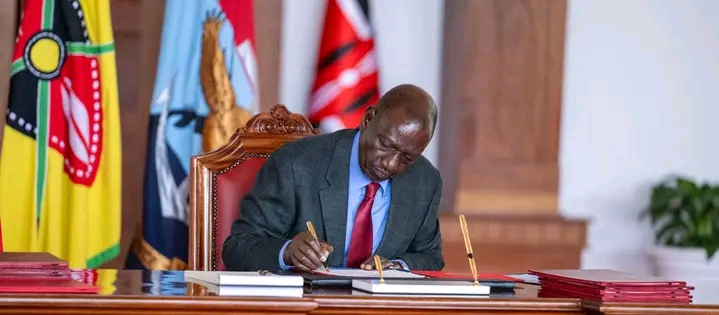
The President now receives more than a Bill. He receives a test of political judgment.
This is the moment to ask whether the final version strikes the right balance between revenue needs and economic breathing space.
Book this slotThe government should be clear on which measures will directly affect consumers. It should communicate what was removed, what was retained, and what ordinary Kenyans should expect from July onward.
No fog. No clever language. No “technical amendment” games.
A tax law that people do not understand becomes fertile ground for fear, misinformation, and resistance.
## Kenya Needs a Fairer Tax Conversation
Book this slotThe Finance Bill 2026 has passed, but the bigger conversation is still unfinished.
Kenya needs a tax system that is firm but humane. One that expands the base without punishing ambition. One that brings the informal sector closer without crushing it. One that taxes digital growth without strangling innovation. One that asks citizens to contribute but also shows them where the money goes.
Because at the heart of every Finance Bill is a simple question: do citizens believe their sacrifice is worth it?
Right now, many Kenyans are not convinced.
Book this slotAnd that should worry the government more than any opposition speech.
The next chapter should not be about who won the vote in Parliament. It should be about whether the country can rebuild trust between the taxpayer and the state.
Without that trust, every Finance Bill will feel less like policy and more like a warning.


Comments
No approved comments yet. Be the first to join the conversation.